Any links to Amazon are affiliate links. '
Showing posts with label reading. Show all posts

Chapter Books for Boys


Boys and girls can most definitely appreciate the same books. This is especially true for a book like Harry Potter. Many of the books you see here will also be found on my Chapter Books for Girls list. There are books, however, that tend to appeal more to boys than girls in general. There are also books that will appeal to most boys, so while there will be some boys who have no interest and while there will be some girls who love the book, the largest audience for the particular book is boys. Books of interest to boys are books that are adventurous and/or funny. Most of them have the main character as a boy. 

I have included the reading level guidelines for each book. Always remember that if you want to read it as a read-aloud, your can read a higher reading level than your child can read on his own. This post contains affiliate links. 

Harry Potter by J.K. Rowling
4th grade and up reading level.

How To Train Your Dragon by Cressida Cowell
3rd grade and up reading level.

The Boxcar Children by Gertrude Chandler Warner
1-5 grade reading level.

The Chronicles of Narnia by C.S. Lewis
3rd grade and up reading level.

Beyonders by Brandon Mull
3rd grade and up reading level.

Fablehaven by Brandon Mull
4th grade and up reading level.

My Side of the Mountain by Jean Craighead George
3rd grade and up reading level.

The Candy Shop War by Brandon Mull
3rd grade and up reading level.
The 39 Clues by Rick Riordan
3rd grade and up reading level.

Janitors by Tyler Whitesides
5th grade and up reading level.

Hatchet by Gary Paulsen
5th grade and up reading level.

Percy Jackson and the Olympians series by Rick Riordan
3rd grade and up reading level.

Eragon by Christopher Paolini
7th grade and up reading level.

Spirit Animals by Brandon Mull
3rd grade and up reading level.

The Hobbit by J.R.R. Tolkien
7th grade and up reading level.

Leven Thumps by Obert Skye
5th grade and up reading level.

3rd grade and up reading level.

Holes by Louis Sachar
5th grade and up reading level.

The Secrets of Droon by Tony Abbott
2nd grade and up reading level.

The Indian in the Cupboard by Lynne Reid Banks
4th grade and up reading level. Note that there is some language in this book, so you might want to pre-read to be sure you are okay with it or read it as a read aloud. 

Treasure Island by Robert Louis Stevenson
4th grade and up reading level.

Where the Red Fern Grows by Wilson Rawls
3rd grade and up reading level.

Five Kingdoms by Brandon Mull
3rd grade and up reading level.

Five Kingdoms by Toby Neighbors
4th grade and up reading level.

 Chapter books for tweens


 great picture books for boys

 gateway chapter books for beginngers


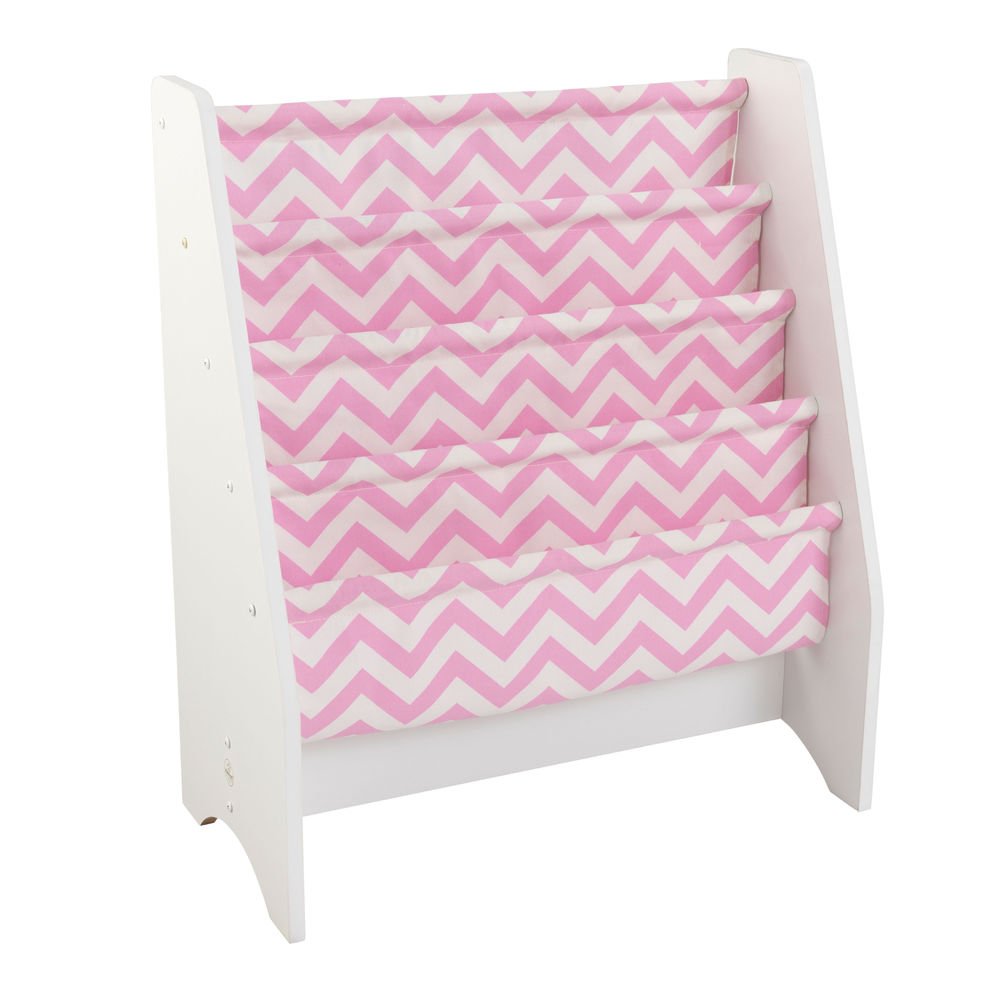
Face Out Bookshelves {Ideas and Tutorial}


From the moment I read about the idea, I knew I wanted to implement it in our home. It was genius and I was all in! We have had these in our home for about five and a half years and I love them the same as I did day one. This post contains affiliate links. In The Read Aloud Handbook, Jim Trelease talks about how seeing the book cover increases the likelihood that people will read the book.

It makes sense. At a book store, they make sure you can see the cover of any book they are trying to sell. The library typically uses the same tactic; if they want to encourage you to read a book, the cover will be facing you. 

Of course this method takes up a lot more space than stacking them on a bookcase. Never-the-less, I wanted a version in my home! I set out to find the perfect wall, and I found it! Chances are good you have a place in your home that work also. Space behind a door. Space on the wall of a hall. Any wall that can't have furniture up against it. 

If you are looking for gift ideas, either for your children or for yourself, this could be just what you were looking for. 

You can create this in many ways. You can do raingutters. You can do spice racks. You can use Picture Ledges shelves from IKEA. My husband made ours. You can see we don't have a huge profile for these shelves to stick out from the wall before they are in the way of the door right there, so it had to be pretty flat. These would work great in any hall on any wall. We have also put these on the wall above the bed in Brayden's room.


Here is our tutorial on how to do a face-out bookshelf. This is the way my husband designed so you couldn't see a back on the shelves--it looks like they are free-floating. Hopefully I can translate from Engineer-ese to English. Below this tutorial, I will show you some other ideas. 

Materials Needed:
  • 3/4"x1.5" pieces of wood cut to the length you want them on the wall. This is the actual size of the wood. They will be called 1"x2" in the store. You will need two pieces of wood for each shelf. Buy as many as you need to fill the space on your wall.
  • 3" Grabber screws
  • Glue if desired (we used wood glue)
  • Paint and paint brush (we use foam brushes for projects like this)
  • Finish nail gun nails
  • Wood putty
Tools Needed: 
  • Drill
  • Router and/or Table Saw
  • Measuring Tape
  • Pencil
  • Finish Nail Gun
Prepping Wood
1.First, buy your wood. If you are confused on what to buy, see the picture below. Click on it to enlarge. The wood shown in this picture would make one shelf. Cut wood to desired length.


2. Next, you need to router and notch one piece of wood for each shelf. 

Use a router or a dado on a table saw to notch one corner (all the way down the long side) as shown. Again, click on the picture to enlarge.


Use a router the opposite corner if desired. You can do it however you like things done. We used a 45 degree chamfer. You could do things more fancy if you like, or you can do nothing at all.

3. Brush all sawdust off and paint. Allow paint to fully dry. You don't have to paint the 1" (3/4") sides of the un-notched wood. 

Putting Up the Shelves
1. Measure and mark on your wall where you want the shelves. You might want to involve a level.

2. Pre-drill holes in your wall where studs are. It is very important you drill into studs.

3. You can glue one side of the shelf if desired and hold to the wall. We can't remember if we used it at this step or not.

4. Use 3" grabber screws to anchor to the studs. You want the 1" (3/4") side facing out so the long side of the wood is where your book will sit. Countersink screws so that they to just below the surface of the wood. Just make sure you don't go too far and split your wood.


Here are all of our initial pieces on the wall


 5. Uses a finish nail gun to put up the face piece. At this step, we did use glue to secure the two wood pieces together. You want the notched side in and up and the routered side out and down. See the picture below. The notching makes it so the shelf is a bit deeper while providing a lip to keep books on the shelf.

Finishing Touches
1. Use wood putty to fill in holes where finish nail gun put nails in. You want this to just go in the holes and not bump out beyond the hole.
2. Paint over wood putty once it is dry.
3. Put books up!


These shelves are so very worth it. I love having them. My children love them. They look at the books on these shelves all the time. 


But this is not the only way to do these shelves. You can see there are many amazing ways to do these shelves!
 Face out bookshelves
This bookshelf would be easy to put into a room.


Hanging Book Sleeves--easy to make

Flat Wall Book Holders--great for small spaces. Make yourself.


10 Dollar Ledges--make yourself


Raingutters are a very inexpensive and easy way to go.

Another inexpensive option is the spice racks here!


Gateway Chapter Books for Beginners

Despite being very gifted linguistically, Kaitlyn was very hesitant to start reading chapter books. Whether it was that she was experiencing perfectionist worries that she wouldn't be able to read a bigger book or that it was she is an art lover and for that reason had an extra love for picture books, I am not sure. The way I got her into reading chapter books independently was to get her started on what I refer to as a gateway chapter book.
A gateway chapter book is an easy book to read. It is often also usually a series. I call it "gateway" because it is what gets a child addicted to reading. A book series is a great way to get a child hooked on reading--they get to know and love characters who can be counted on to be there book after book. As I have discussed previously, some people hold a belief that a book series is inferior quality, but I strongly disagree. Even if you are in that camp, however, you can't argue with the success rate of a book series turning a skeptical chapter book reader into a chapter book devourer. I have seen it twice with my older two children and I am just starting the journey with my third, who is six.

A book series allows a person to enjoy a book more (once he is on book two or later) and struggle less with getting to know an author's writing style. That can be a limitation, and at some point, you might have to nudge your little reader past one author and onto another (I had to do that with my oldest), but a series is a sure-fire way to get your child interested in reading independently. 

Each of these series rate at about a grade 2-5 reading level. Series usually start at a 2 and get harder as you get further into the series. If you know your child's reading comprehension level, that will help you in knowing if these series can be started by your child independently or not. Any of these would make a good read aloud for a four year old or up; remember children understand at a higher level than they comprehend independently. My children started reading each of these series independently in first grade or second grade. 

I will also add that while a chapter book series is a great way to get a child confident in reading chapter books, it doesn't mean your reader needs to stay in a series. Kaitlyn read a few Magic Treehouse books and then jumped to stand alone books. There are very few series she has latched on to and she typically enjoys the books that are the one and only. So Magic Treehouse served her well, but she quickly found she prefers to not read a series. This post contains affiliate links. 

Magic Tree House by Mary Pop Osborne
This is hands down my favorite gateway chapter book series. I can't even tell you how many books Osborne has written. I wouldn't be surprised if she couldn't tell you. This series is about siblings who go on adventures to different locations and eras. There is a historical fiction aspect to these books that I love. The books are mysteries, which always keeps kids engaged. Each book has a mystery and there is a larger mystery being solved throughout the books, so children are interested in reading the next book to see what happens. A great way to start these books is to read the first one out loud together. Then encourage your child to read one at some point, when you feel your child is ready to take that step. It is good to talk about what is going on as your child starts to read alone so you can be sure your child is understanding what he is reading. This series appeals to both boys a girls. We own the first 12 of these. Then we borrow from the library to continue on when the desire strikes.

Reading level is rated grades 3-7, but my children all started this in first grade.

The  Boxcar Children by Gertrude Chandler Warner
This series is old enough that most of us parents today read them when we were children. These books are full of adventure and mystery. They are good, clean reads. The text is easy to read and comprehend. I love the aspect in these books of siblings sticking together and forming a tight bond. This series appeals to both boys and girls. These ones are worth owning.

Reading level is rated grades 2-5. 


Mercy Watson by Kate DiCamillo
McKenna, my third child, has always liked the girly books and not had much interest in animal books at all, whether a picture book or a chapter book. A few months ago, Mercy Watson suddenly became her favorite book. This surprised me quite a bit. One thing McKenna loves more than princesses is laughing, and Mercy Watson brings the humor in a big way. This book would appeal to both boys and girls. Any child who likes to laugh will like this series. McKenna got this box set for Christmas and she loves reading and re-reading these books.

Reading level is rated Kindergarten-3rd Grade. 


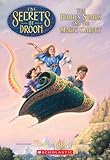
The Secrets of Droon by Tony Abbott
This is a fun series full of adventure. Brayden burned through this series one summer. It isn't classic literature, but it is a fun read. It is appealing to readers who like fantasy fiction. Kaitlyn has never gotten into them. I would say this can appeal to both genders, but by and large I have mostly only known boys to really get into them. These are books we have only ever checked out from the library.

Reading level is rated grades 2-5.


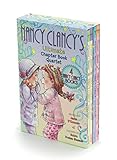
Nancy Clancy by Jane O'Connor
I definitely didn't give O'Connor enough credit. I very much enjoy the Fancy Nancy books, but I expected very little from these chapter books. Picture book gone chapter? Sounds like disaster for sure. Fancy Nancy was one of McKenna's favorite picture books, however, so I thought it would be a good segue into the chapter book world. I was so very pleasantly surprised! These books are very well written. They are mysteries that involve the familiar beloved characters from the picture books. I am not really into girly books. This series is the perfect balance of a strong female protagonist who is feminine. I would definitely recommend them for adding to your home library.  We own all of the books that have been printed so far. I would say these will appeal to girls.

Reading level is rated grades 1-5


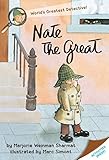
Nate the Great by Marjorie Weinmann Sharmat
Nate the Great is a classic series. They were written in the late 70's, so many of us are probably familiar with them from childhood. The books are mysteries. They are well-written and fun. We have never owned these. Brayden had a short stint with them one summer, but mysteries have never been his genre so he didn't latch on to them. If you have a mystery book lover, it would be a series worth owning. Children tend to gravitate toward books where the main character is their same gender, so this will appeal more to boys although girls can enjoy them, too.

Reading level is rated grades 1-4. 

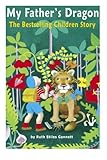
My Father's Dragon by Ruth Stiles Gannett
This is a fun story of adventure. It really appeals to children of both genders. This was a book Kaitlyn loved. It is a short series, which can be nice if you are worried your child will have a hard time leaving a series to branch out. 

Reading level is rated grades 2-4.


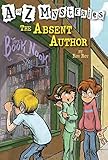
A-Z Mysteries by Ron Roy
This is another mystery series. This one strongly appeals to both boys and girls. This was one of Kaitlyn's favorites as a second grader. They go through the letters of the alphabet (The Absent Author, the Bald Bandit, etc.). This is a series I wouldn't mind owning, but Kaitlyn had read them all by the time I heard about them. 

Reading level is rated grades 1-4. 


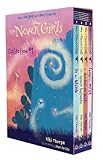
The Never Girls by various authors
The Never Girls is a book series about four best friends who are whisked off to Never Land where they meet Tinker Bell and other fairies. I know, it sounds silly and like it will be sub-par. The stories are fun, however, and written well enough for your beginning chapter book reader. It is a great series for a girl who loves imaginary lands and princesses and fairies. And even though Kaitlyn isn't typically into princess books, she enjoys these books. They have an element of mystery to them and they feel intense for a young reader. We own the first four of these. I would say you might just borrow from a library, but you might own the first few to have them around to get started. That actually reminds me that typically at a library, the first several books in a series often have a long waiting list, but as you get further on, the library typically has the books on hand most of the time. So owning the first few can be handy. 

Reading level is rated grades 1-4. 

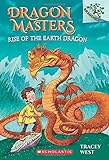
Dragon Masters by Tracey West
This is one of Kaitlyn's favorite series. You can see she really likes books with dragons in them. These books are written especially with new independent readers in mind. They are full of adventure and appealing to boys and girls. We own these books on Kindle. 

Reading level is rated grades 1-3.


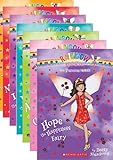
This series is super, super easy to read. This is not classic literature. The appeal of this series is it is a fun series that appeals to girls. Even beyond the other girly books out there, these series are comprised of a bunch of mini-series books of typically 7 (maybe always 7) books. They have a series on princesses. They have a series on ocean animals. They have a series on sports. They have a series on pets. There is just a wide variety so whatever your little girl has a particular interest in, you can find a series that caters to that interest. 

I talk a big game in letting kids read what they are interested in, but when I first saw this series, my nose was admittedly turned up. Kaitlyn has never been into girly books, so it was easy for me to walk away. McKenna, however, loves girly books. So we gave them a shot. They don't hurt to read and they are super fast reads, which is always rewarding for any reader.

Reading level is rated grades 2-5.

Related Posts:

Reading Aloud to Preteens

Photo credit: Brayden Plowman
Your child has reached the age of 9 and really is a proficient reader. Congratulations! And whew! That means no more needing to read to that kid. Right?

WRONG!

You absolutely can read aloud to your preteen. Not only can you, but if you do, your preteen will enjoy many benefits. 
  • The child has enjoyable reading time each day. As students get older, reading gets tested more and more. Reading aloud with a parent, and not getting tested, is just purely reading for fun.
  • The child also enjoys reading because he is spending time with a parent. You are sharing something together. 
  • Reading to your child is like advertising the pleasure of reading.
  • Children can understand a higher reading levels than they can read. Until 8th grade, children read and listen on different levels, and listening is higher (see page 37). "...children can hear and understand stories that are more complicated and more interesting than anything they could read on their own..." (page 37). 
  • Reading a higher level than the child can read helps build vocabulary. 
  • It helps improve grammar--"Grammar is more caught than taught...By hearing the language spoken correctly, you begin to imitate the pattern--both in what you say and in what you write" (page 41). 
  • You can expose your child to classics at a much younger age. Kaitlyn is 8 and I am currently reading Charles Dickens to her. She would struggle to understand the book on her own. With me, she can get used to the language used. She can ask what words and phrases mean. I can stop every so often and talk with her about what is happening. I personally didn't read Dickens until high school. She is getting exposure to classics at a much younger age. Now of course, you do want to be prudent in choosing books--make sure the content is something your child can handle emotionally and on a maturity level. Just because you can read it doesn't mean you should. 
Oh believe me that I know that reading aloud to each of your children takes a long time. You would LOVE to be able to send your preteen to bed without having read to the preteen as well as all of your other children. This post contains affiliate links. 

Jim Trelease points out in the Read Aloud Handbook that "Parenting is not supposed to be a time-saving experience. Parenting is a time-consuming, time-investing--but not time-saving." (page 40) Reading aloud to your child each night is a best way of spending your time. 

Here is how we divide up our time reading aloud to our children. Hopefully it can spark some ideas for how to make things work for you:
  • Three Year Old: Each day before her nap, I read to Brinley aloud. Each night before bed, my husband reads aloud to Brinley. She gets double reading each day. She also spends her 60-90 independent playtime listening to books on CD (which have been put onto an iPod).
  • Six Year Old: As Nate is reading to Brinley at night, McKenna is being read to. She is either being read to by Brayden or me. 
  • Eight Year Old: At the same time, Kaitlyn is being read aloud to by either Brayden or me. We alternate. As soon as I finish a novel with one girl, I start with the next girl the next night. 
  • Ten Year Old: Brayden is older and has lower sleep needs overall than all of our girls. Once all of our girls are read to and put to bed, Nate reads to Brayden. We used to alternate who read to him, but Nate always reads to Brayden now. It is a special father/son thing they do each day. 
Once Brinley is done with naps, I think we will alternate who is reading to Brinley at night and who is reading to the other two girls so that they all get time read with everyone. For now, this is what works for us. 

I really encourage you to continue to read aloud to your preteens. When I was in seventh grade, that is when reading books started to become a heavily tested thing at school. I went from reading about 50-60 books a month to half that. By the next year, I really only read what was required of me at school. During summers, I would read some. I was in honors English and AP English classes. I had a lot of reading, but it was never for pleasure. I continued this pattern through college. It wasn't until I graduated from college that I resumed reading for pleasure. I, fortunately, never lost that love of reading, though I did shelf it for a long time. Reading aloud to your children at the very least provides a moment of reading for fun each day.

Related Posts:


Are Book Series Beneficial or Harmful to Reading Skills?


There is a widely held belief that a child reading a book series will be detrimental to the development of that child being a good reader. I see it all the time, especially in groups created for parents seeking to foster a love of learning in their children.

"We have been reading [insert series here]. I know it is so bad but it is the only thing I can get him to sit through!"

"I know series books are twaddle, but my daughter liked..."

Here it is people. The truth.

Reading a book series will not harm the reading skills of your child. 

Reading a book series is okay.

Reading a book series can be beneficial to your child.

Reading a book series can be the "gateway" reading experience that will hook your child on reading and make her a lifelong book lover. This post contains affiliate links. 

From Jim Trelease, author of The Read-Aloud Handbook, "The fear that series books (or Harry [Potter]) will corrupt the soul is...a close relative of Y2K paranoia." page 146

The history behind the "looking down the nose" at series books goes back to the 1860s. Around this time, dime novels were being published. These were marketed toward and appealed to the servant and labor class (gasp!). Soon to follow were the series novels, aimed at preteens and teens. Some of the series included in these early series are Nancy Drew and the Hardy Boys. Elitists were so against these series books that companies refused to print Nancy Drew index cards for the card catalog. They also blacklisted certain authors who wrote book series. 

Not only did these elitists believe series were bad, they also believed fiction was bad. Yes, fiction. "...fiction was something to be fed to children in only  small, controlled doses" (page 146). The worst of the fiction was obviously the series books. An actual expert from a quote is "No dissipation can be worse than that induced by the perusal of exciting books of fiction...a species of monstrous and erroneous nature" (page 146). 

They believed a series was so much worse than fiction because it was addictive. Children wouldn't just read one fiction book--they would read the entire series! And they would do it quickly and with great interest! They were indulging in these books of fiction, which were supposed to be only given in small doses. 

So there you have your foundational history as to why a book series was proclaimed to be the worst of the fiction books. 

But in my mind, the very reason the elitists abhorred series books--the fact that they result in children reading more fiction overall--is the very reason to applaud the series books! These books result in children reading more books. 

There is an old adage that "the more you read, the better you get at it." Series books lead to reading more. One powerful example is the Harry Potter series. It is marvel to see children willingly picking up a book as thick as any in the series. 

In 1926, the American Library Association surveyed nearly 40,000 students. They found that the favorite book of 98% of students was a book series. They also found "...the high-IQ students reading twice as many of the series books." (page 147). 

Dr. Catherine Sheldrick Ross, acting dean of graduate studies and professor of library and infomraiton sciences at the University of Western Ontario, Canada, has done some award-winning research on the topic. She has found that series books have been the "uncontested favorite of young readers for the last one hundred years..." (page 145) She pointed out that reading a series helps children engage in the "private lessons" of reading. It teaches children:
  • Rules about skimming and inferring.
  • When to slow down to decipher clues.
  • The importance of chapter titles.
  • The importance of characters and setting.
As Trelease sums it up--"Series books are avidly read by the best readers, without impeding their skills."

So do not feel like you are damaging your child's academic future by allowing series books to be read. 

Reading a second, third, etc. book in a series is like chatting with an old friend from high school. You know each other well and are comfortable with each other. While you might not make any huge cultural revelations or learn a ton of new things, you can still learn great life lessons. Sometimes those old and dear friends surprise you. You have a history with this friend and therefore you are invested into the future of this friend. You will contact the friend later to see what the life update is. 

The same is true for a book series. 

Weaknesses
While I love a book series and do not have a problem with my children reading them at all (in fact, I strongly encourage them because I know what a good book series will do for a love of learning), that isn't to say there aren't some limitations with a book series.

A book series that is written by one author will only expose your child to a certain number of vocabulary words. You child will gain greater exposure to a rich vocabulary if he branches out and reads books by various authors. This doesn't mean a book series has to be out. It just means read more than one series in life.

Another weakness is that your child will not need to work hard to get to know a new style of writing, new characters, or new plot if he sticks to just one series. 

A book series can also be a major security blanket. Your child might feel hesitant to move beyond the series. Now, some series are short, but many series for children have 50-100 books. Those are the ones you will need to draw your child from and encourage your child read something different. 

So yes to a series, but do encourage a variety of series. I actually had to require my oldest read something other than Magic Tree House initially. He was hesitant to read anything else as a first grader. He found what he liked and he was sticking with it. Once he read something different, however, he gained confident that he could handle other books. 

Good Book Series
There are countless good book series to choose among. Here are some of my favorites--I would love to hear yours!:
Conclusion
Let me end with some anecdotal evidence. In my youth, I loved reading. Most of the time, I read series books. My personal favorite series of all time was the Baby-Sitter's Club. I typically read through about 50 chapter books a month in my later elementary years. Not a typo, and yes, I had other hobbies. 

I have since gone on to get a Bachelor's degree in English. I was even named Most Outstanding Graduate. I am still an avid reader today, and I still enjoy a good series!

Brayden, my oldest, is 10. He also reads series books often--in fact, I think it is safe to say that of the books he chooses to read, 99% of them are book series. He has been identified as gifted and as an 8 year old, he was tested as having a college reading level. 

Kaitlyn, age 8, has also been identified as gifted. She completes at least one book every day. She reads many series books, though her personal percentage is probably more like 85% of the books she chooses on her own are book series.

My other children are too young to have strong evidence to share.

You can see books we love on these Pinterest boards:

  Follow Valerie's board Chapter Books for Boys on Pinterest.

  Follow Valerie's board Chapter Books for Girls on Pinterest.

Today the ladies of the Babywise Friendly Blog Network are all writing on the topic of Reading and Learning. Be sure to check them out, and check out our Pinterest page:

Visit Babywise Friendly Blog Network.'s profile on Pinterest.


Simple Ways to Ensure Your Child Loves Books

This is how I found Kaitlyn most mornings this summer:
sitting in a spot of morning sun with her latest book.
One of my highest priority goals as a parent has always been that my children will love to read. I am passionate about reading. I have a degree in English. I set aside one day a week for myself to be my reading day--free from chores and to-do lists (which sounds more amazing than it actually ends up being--I am still a mother after all and I am not the type to neglect my children. But I do usually make it through a book on that day). I love to read and I always have.

I want my children to love to read and to turn to books. I believe the power to read and comprehend what you read opens the doors and windows of possibilities to your life. You can learn anything if you can read. 

My children are now 10, 8, 6, and 3. My three older children are all fantastic readers and above their grade level. All four of my children love books. Love. I feel like I have met one of my number one goals as a parent (don't worry--I won't stop working on it). In fact, as I have been writing this, my husband called me. As we talked about what I was doing, he asked what the post topic was. When I told him he said, "Ah, that's a good one. You are definitely an expert in that." I have become expert because I want to be expert. 

So how do you go about creating book lovers? Here is a simple list:
  • Read to your child every day.
  • Let your child see you reading regularly.
  • Surround your child with books.
  • Take your child to the library.
That really is it. Very simple. I actually come from a long line of readers. In fact, my grandfather loved to read so much that it was something that was explicitly talked about at his funeral. Even as a young child, I knew I liked to read more than most of my peers. I have always been analytical. As an elementary aged student, I determined that I loved to read because I saw my parents loving to read. This post contains affiliate links.

As you may know, I love the book The Read-Aloud Handbook by Jim Trelease. When I first read this book, I felt like I found someone with even more passion for reading than I have. I found validation in my theories for why people love to read. I also found even more ideas for helping develop young readers.

In chapter 7, Trelease talks about things that impact interest in books. Here are some interesting statistics based on Kindergartners:

  • Children with a high number of books in the home were 80.6% at high interest for books and 31.7% for a low interest. Conclusion? Good to have books in the home. But let's go on.
  • When the child owns a library card, there is 37.5% high interest in books and 3.4% low interest. But you don't want to just own it...
  • When the child was taken to the library, there is a 98.1% high interest in books and a low 7.1% with low interest in books.
  • When a child is read to daily, there is a 76.8% high interest in books and mere 1.8% low interest in books. 
Doing these four things are so simple. You can do these things! 

Did you notice the staggering numbers in favor of going to the library? Those are impressive numbers. If it is available to you, take your children to the library regularly! Teach your child how to use the library. I once dated a guy in college who had no clue how to use a library. I had to teach him how to look up something in the library so he could do a research paper. That didn't last long. Allow your children to become familiar with the library.

My children go to the library once each week. We do this even with the older two who read a lot of books on their Kindle Paperwhite. There is a magic in being surrounded by the books. They both read hard copy books as well as their eBooks. 

You might think you have enough books that you don't need to go to the library. I know--we have hundreds of books. As Jim Crawford noted, "People who use libraries use them not because they don't have books but because they do have them and want even more" (page 126). 

Test these simple ideas out. And if you want to build passionate readers, I cannot recommend The Read-Aloud Handbook any higher. 


Related Posts: