Any links to Amazon are affiliate links. '
Showing posts with label mealtime. Show all posts

8 Reasons Family Meals are Vitally Important

Family meals eaten together reduce risks of obesity, substance abuse, depression, and eating disorders. Family dinners also increase vocabulary, grades, and health.

I insisted he say a few words. It was the final day of the Marriage and Family Relations class, and everything he had ever said was pure gold. It made sense. He had a PhD in Child Psychology and had worked as a Principal in his working days. As a great-grandfather, he also had the gift of wisdom that only age and life experience can truly bestow. He acquiesced. Included in his brief sharing of wisdom, he made a final statement, "If there is one thing you can do with your family that will make all of the difference, it is to eat family dinner together together. If you can eat dinner together about five nights a week, it will all work out."

8 Reasons Family Meals are Vitally Important | #mealtime | family dinner


I am an easy sell on that idea. I am a firm believer in the importance of family meals, and have even written about Prioritizing Family Meals and why. We make an effort to eat together each night. As our four children are getting older and more involved in activities, it definitely is more challenging to do this. I have to intentionally think things through, plan meals out, and prep during the day so meals can happen when everyone is home at the same time. I appreciated his words as a buoy to keep up my efforts.

Two days later, I attended a meeting for parents discussing technology for children. Included in the presentation was the power and importance of the family meal in protecting children from harmful media. The very next day, I attended a presentation for parents on how to prevent substance abuse. The number one factor to reduce risk? Family meals.

You know when you feel like the Lord is just making sure you understand something to its fullest? This was one of those moments. Clearly the family meal has power in many facets of parenting.

Before we go further, it is important to point out that the goal is a family meal. If breakfast is the time of day when a family meal can happen, that is great! Maybe lunch is your winning meal. It might even change from day to day. The idea is you are all eating at the same time, in the same place, and without distractions. The conversation that happens at the dinner table is where the magic happens. Magic? Well, it seems like it. For something that takes comparetively little time, it reduces risk in all of the big-ticket worry items parents face. One study concluded:
"The importance of the family as a key component of healthy adolescent development has been clearly demonstrated by research.1 Eating meals together is one aspect of family life that has been demonstrated to benefit young people. Family meals offer routine and consistency2 and provide an opportunity to socialize children and teach them about communication skills,3 manners, nutrition, and good eating habits.4"

8 Ways Family Meals Improve the Lives of Children


  1. Dinnertime conversation boosts vocabulary even more than being read to
    This is almost mind-blowing to me because I view reading aloud to children vitally important. Research has shown that conversations at the family meal boosts vocabulary, and that it is more effective in doing so than even being read aloud to. 
  2. Children who eat family dinner tend to eat healthier foods
    Studies have even found that children who eat family meals eat healthier foods. This could be as simple as when you are eating a meal together, you usually have prepared it on some level and are more conscious about what is being served. Also, the parent is presenting foods instead of having the child find what she can find. If you are watching your child eat, you will also be sure she actually eats the vegetables. Example is also powerful, so if your child sees you eating healthy foods, your child will be more likely to eat healthy foods. 
  3. Children who eat family meals together are less likely to do drugs or drink alcohol
    8 Reasons Family Meals are Vitally Important | #mealtime | family dinner

    Research shows that families who eat dinner together 4-5 times per week are 33% less likely to use alcohol.
  4. Children who have family dinner are less likely to make poor choices online
    At the presentation from NetSmartz I attended for parents on internet safety, family dinner was listed as the number one way to help guard your child from the myriad of internet issues that come up (from pornography, to cyber bullying, to sexting). 
  5. Studies show family meal time raises self-esteem and reduces depression
    The study I quoted earlier discusses the impact of family dinners on depression and anxiety. 
  6. Children who regularly have family meals together have higher grade point averages
    Studies have found higher grade point averages and higher achievement in school when the child has meals with the family. Other research done by Columbia University found that teenagers who ate family meals together 5-7 times a week were twice as likely to at A's in class than those who ate together two times or less.
  7. Children who have family meals have lower obesity rates and lower eating disorder rates
    Research shows that there are lower obesity rates among children whose families eat family meals together regularly. 
  8. It is an easy way to spend more time together
    Family meals are not always easy to pull of, but everyone needs to eat. Having a meal each day with everyone together is a relatively easy way to spend time with each other. When you add in the list of research-proven benefits, it is time well-spent. 
These eight things listed above are important to parents. These are the issues parents worry over and feel overwhelmed with. Family meals do not have to be fancy. You do not have to spend hours preparing a meal for the child to gain these benefits. While our lives are busy, we have never lived in a time more suited to help you succeed at this. A little time on Pinterest can help you find meals you can make in your budget and time limit. Time spent in parenting groups can help you get ideas on how other families fit it in (I happen to have an amazing group on Facebook). You can do this. It might take some effort, but the effort will be well worth it.

See also:

How to Teach Table Manners to Your Child

When I was in the dating pool, all it took was a meal for me to be able to quickly know if I could pursue the relationship any further or not. I remember in college being on one particular date. We had been on several dates, but none with food. The way he chewed with his mouth open was an absolute deal breaker for me (now, obviously I didn't have strong desire to pursue it further--otherwise I may have been able to get past the chewing). Clearly table manners are a big deal for me. Just how do you go about teaching good table manners to children?

How to Teach Table Manners to Your Child and table manner ideas


1-Have actual family meals
It will be really, really hard for you to teach your child to have good table manners if there is rarely a family meal to learn and practice the manners. Make sure you prioritize family mealtime.

2-Be a good example
As always, your example as a parent will go far in teaching mealtime manners. If you say, "Please pass the ketchup," your child will internalize that and be more likely to use "Please pass..." when she wants something. Teaching your children starts with you. If you try to push good manners but you don't use them yourself, you will have a hard time getting your child on board. If you want your child to have good manners, make sure you have good manners.  More is caught than taught, so the saying goes. 

3-Teach in times of non-conflict
If you are going to have a policy that your child can't start eating until everyone is seated or a prayer is said, you will find it easier to explain this at a time when you aren't all sitting down at the table, hungrily waiting for everyone to be seated. It will be easier to remind your child to wait to eat than to teach your child to wait to eat. Train in times of non-conflict. Another great tool to use here is Ask and Tell. This is especially handy if you are headed to another house as guests for a meal. You remind your children the rules just before you leave. Ask and Tell is one of my favorites, so if you don't know what I am talking about, GO READ!
How to Teach Table Manners to Your Child and table manner ideas

4-Practice, practice, practice
It is all nice to talk about how to behave at meals, but you must allow for practice. What does this mean? Referring back to point one, you must have family meals where manners can be worked on. This also means your child needs time to get good at these skills. Practice. Not performance. Piano practice starts out very painfully. Manners practice can very well be the same. Your child will reach, start eating, chew with her mouth open, and talk with food in her mouth.

Some of these skills are things my children did well with, but get harder at certain points in time. A serious growth spurt can lead an 8 year old who has been praying over 3 meals a day her entire life to sit down and just start eating (that happens at my house!). A lively conversation or funny story can lead a 12 year old to talk with his mouth full in order to get his point in immediately (that happens at my house!). Certain textures of foods lead certain people to chewing with their mouths open (again, here. Ugh.). 

So always remember the practice and remember the fact that children are not perfect beings. 

Remember the practice policy as you extend beyond simple family meals. Do you want to host friends? Either host close friends who will be patient with your practicing, or practice with close friends before introducing people you might feel more pressure entertaining. If you are invited somewhere else, perhaps you will ask grandma to host a meal beforehand so you can practice eating elsewhere. If you want to eat out at a restaurant as a family, start with family-friendly places before heading for places with a more formal and less child-friendly atmosphere. Your kids don't have to be old to go to nicer places, but they should be practiced. 

Manner Ideas
You might be wondering what manners you want to teach your children. I have a list of some of our policies, which includes the lofty "we don't say blah," so it is a great starting point for manners for young children. Some manners to aim for are (some of these are found in  On Becoming Preschoolwise on page 189):
    On Becoming Preschoolwise
  • Compliment the cook (this is a more sophisticated way of saying, "We don't say blah")
  • Chew with your mouth closed (point of interest, have you ever heard of misophonia? It is a real disorder where you can't stand the sound of other people chewing. It literally means "hatred of sound." Kaitlyn has this, and so does my husband's youngest sister. If someone is chewing loudly at my house, the contortions of Kaitlyn's body let us all know). 
  • Say please and thank you.
  • Sit up at the table. We have a certain child who likes to lounge at the table. You might have a leaner. We have a lounger. 
  • Do not reach. Instead, ask for things to be passed to you.
  • Do not talk with your mouth full.
  • Ask to be excused.
  • Do not interrupt others.
Related Posts:
  • Three Candy Speed
  • Ask and Tell
  • Marbles for a Cause
  • The Importance of Community

Baby's Feeding Schedule With Solid Foods

When it is time to start solid foods, the daily schedule may shift some, but your pattern should stay the same. This post outlines when and where solid foods should fall in your baby's daily schedule.

How to work feeding baby solid foods into your daily schedule

One of my favorite stages with babies is introducing solid foods to them. Even when you introduce a food they love, their reaction to the first bite is often worthy of an America's Funniest Home Videos entry. The nose gets scrunched up, the eyes may shut, and a shiver runs through the body. You can rarely tell if your child will love a food or not from the first bite.

While starting solids is entertaining, it can also be confusing. When you are going through giggles, you may also wonder when your baby should be eating those solid foods. Right with the liquid feeding? Should it be spaced out? What is the right call? I have the answers for you.

Don't make the mistake of feeding baby too often.

I often get questions that go something like this, "Hello! My six month old hasn't been sleeping well since we started solids. Can you see something wrong in our schedule?

7 AM Nurse
9 AM Solids
9:30 AM Nap
11 AM Nurse
1 PM Solids
1:30 PM Nap
4 PM Nurse
6 PM Solids
7 PM Bedtime"

I immediately know what the problem is when I see that schedule.

Do you see it?

Baby, who has been breastfeeding or bottlefeeding every 3-4 hours, is suddenly being fed every two hours instead of every 3-4 hours. 

A six month old does not need to eat more often than a six week old. 

From the time you brought your baby home from the hospital, you worked on establishing a 2.5-3 hour routine, which meant baby ate every 2.5-3 hours. As young as five weeks old, some babies can go 2.5-3.5 hours. By four months, many babies are on a four hour feeding schedule. 

Then we introduce solids and feed them every two hours.

Sure, there were times baby ate every two hours, especially during growth spurts, but that was never what you were aiming for. If your baby tried to consistently eat every two hours, you would have scoured the book, blog, and/or fellow Babywise mom brains for help on getting that feeding interval longer. 

When your baby starts solids, stick with the 3-4 hour interval in your routine. 

Stick with eat/wake/sleep. When your baby wakes from nap, start with your liquid feeding. Then move on to solids. Feed as much solid food as your baby will take--do not force more and do not limit it (unless you have been instructed otherwise by your baby's pediatrician). Once your baby is done eating the solids, have playtime. Finish up with a nap. Once baby wakes up, start the cycle again.

If your baby is really not hungry at all for any solids, you can feed half of the liquid feeding, do solids, and then feed the other half. If you are breastfeeding, you feed one side, solids, second side (or do half time if you do single-side feedings). If you are bottle feeding, do half of the bottle, solids, then second half of the bottle.

Feed baby solids three times per day.

How to work feeding baby solid foods into your daily scheduleThat will mean that if you are on a four hour schedule with no dreamfeed, so you are at four feedings a day, your baby will not eat solids at every single meal. Pick three. The three you pick really don't matter in general; it just matters that you pick the best three feedings for you and your baby.

You might pick your first meal of the day so that it is like "breakfast." You might skip that first one because you have so much milk and your baby isn't hungry enough to add solids. Feeding solids adds a fair amount of time to your feeding time, so you might base when you feed solids based on what your daily routine looks like. If you have a 3 PM feeding and need to pick other children up from school at 3:30, for example, you might not want to do solids at 3 PM. I have had solid meals at different feedings among my four children. I always did what made the most sense with each child.

Another note, you want to get to three solid feedings per day at some point, but you don't start there. Start with one. Give it some time (at least a few days, but maybe even as long as a couple of weeks) before adding a second. Give it some more time, then add your third.

Feeding solids is not as confusing to work into your daily routine as it might seem at first. When you started a schedule with your baby in the beginning, you were starting as you mean to go on. Go on as you intended when you started. Feed the entire meal, milk and solids, at once. Feed every 3-4 hours. Land at 3 solid feedings a day. Do those things and you will be on the right course!

Related Posts:

How To Organize Meal Time


On the surface, meal time should be easy. We all want to eat. All you have to do is decide what to make and then make it. Right?

If only.

As mothers, we need time to make the meal we want to make. We might have activities that interfere with the timing for the meal. We might have babies to unexpectedly make dinner prep harder one night. We also need the ingredients for said meal, which means we need some pre-planning and shopping.

So how do moms do it? I went to Facebook and asked for ideas. The main takeaway here is to plan ahead. The most sure path to success for you is to plan ahead. Plan your meals ahead. Plan your trips ahead. Prepare things ahead of time. Here is a list of the tips:
  • Shop a month at a time
  • Shop two weeks at a time
  • Shop once a week
  • Shop during a short window of time
  • Add things you need to buy to your list as they run out so you know what you need
  • Keep a master list of favorite meals and refer to it when making a meal plan
  • Make a list of meals in four month periods and use that plan every four months
  • Plan meals based on what is going on that night. You might need faster meals on certain nights depending on different plans and activities
  • Get out and prepare anything you need for the next day before bed
  • Order groceries online and pickup. This helps you avoid going over budget
  • Check cupboards and fridge when writing grocery list so you don't forget to buy something or over-buy something
  • Get coupons from favorite sites and apps after you make your list and know what you need
  • Keep a list of easy, quick, and healthy meals so you have those to refer to
  • Set aside time to cook each day
  • Double recipes when possible and freeze one meal
  • Find a helpful app to track meal plans and shopping lists
  • Create a meal exchange group
Here is what you said:

PLAN AHEAD
Diedre said:
Until a week ago we lived in a very remote area, and had to drive for an hour and a half to get to the store. This meant we only went shopping once a month, so we had to be fairly organized.

Breakfast and lunch I just kept things like oatmeal, pancake
 mix, PB&J, etc on hand for the month, but there was no set menu. 

I had a "master list" of all the foods we like to eat for dinner. I would sit down and plan enough meals for 4 weeks, making a list of all needed ingredients as I went. When I was done with the list I would check it against what I had in the fridge/freezer/pantry and pare it down to my final shopping list. The final list of meals was more of a list of meal options than a set menu. Depending on how the day/week was going I'd look at the list in the morning, pick what we were going to eat that night, and go from there. 

Now though, we have moved into the city and don't have as much pantry space, so I look forward to seeing others' responses to this question.

Leslie said: 
I have done the monthly shopping as well, I even made a list seperating all of my meals into 4 different months, so we just rotate through the 4 months lists. But now that I'm pregnant, half of the stuff doesn't sound or taste good anymore, so I've had to go back to shopping for 2 weeks at a time, based on what sounds good lol.

PREPARE IN ADVANCE
Casey said:
I use an "old school" calendar and keep it on the fridge and sit down and plan out our meals (dinner only) for 2 weeks at a time. I make the grocery list as I write down meals. I also write in our Family Activities so I know if I need to have a "quick meal" for certain evenings or if we're going out for dinner for a special occasion. Each evening I look at the next day's meals and put whatever meat out to thaw so it's ready for the next day. If I didn't plan, we'd eat out WAY MORE than we should. I also order my groceries from Kroger online and it has really helped me stay on budget. I don't grab unnecessary items and if I'm over budget for the month, I can easily delete items we can get buy without for the next couple weeks.

Abby said: 
I menu plan on Sunday afternoons when everyone else is napping! I have a binder full of recipes I've found over the years, organized by starch (pasta, rice, potatoes, grains, & legumes). I pick recipes for the week, write them down on a menu I printed off from Pinterest, and write down on my shopping list what we'll need (being sure to check the cupboards and fridge so I don't run out of staples or buy something I already have 3 of!) My list a split list from Real Simple, for Trader Joe's and Target. Then I hop on Target's Cartwheel app and Coupons.com and grab whatever coupons I want. If I'm feeling super-ambitious, I check StretchingaBuckBlog.com for their ad & coupon match-ups.

Sally said:
I've just started meal planning on a monthly basis rather than weekly. And it seems to take much less time!! It makes weekly food shopping easier too. If I'm making a slow cooker meal I prep it the night before so I can just get it out the fridge and switch slow cooker in the morning.

FIND QUICK AND HEALTHY MEALS
Susan said:
I've been making weekly plans for meals. And shopping once a week. I keep a list of easy dinners and since I'm home on maternity leave, I'm playing with lots of new recipes that are easy, quick and healthy that I can save for when I go back to work. Also rely on my slow cooker for easy meals when I have both my baby and toddler home.

SET ASIDE TIME TO  COOK EACH DAY
Katie said:
My planner has a small space at the bottom to planmeals (personal-planner.com is where I get it), so i plan them in there in tiny handwriting. The planner shows one week at a time. I plan the main dish and generally what will go with it (like a veggie and a fruit). I make the shopping list in the blank pages at the back of the planner. I shop once a week in the awkward space of time between dropping older kids at school and dropping my 4yo at preschool - there's about a 50 minute gap there, it's perfect.

At the grocery store, I really only pick up what is on the list. Throughout the week as things got low or ran out (or the backup ran out on an often-used item), I added that to the list. Most of our meat doesn't come from our grocery store, it comes from random other sources/farms so I don't worry about sales a lot unless it's on a type of item I use a ton (say, canned diced tomatoes).

As for my day, most days I plan to be home between 3:30-5pm for cooking. It's a lot of time but I love good food so it's worth it to me. Often baking, like muffins if they're needed on a soup night, gets done in the mornings. I often try to make extra of any meal/baked good where it makes sense and put it in the deep freezer if there's room. On the days where the kids have a late afternoon activity, I plan slow cooker or super simple meals. Each week the meals are pretty carefully planned based on what activities are going on each day.

All of my favorite recipes are typed and I print them into a spiral bound book every couple years. New recipes get printed out and put in a thin binder. All my cookbooks are kept in a cupboard in my kitchen and I really like having them there even though it takes up somewhat valuable space.

And I keep things on hand like cereal, oatmeal, PB&J, etc for breakfasts and a lot of the kids' lunches.

FIND AN APP YOU LOVE
Whitney said:
Paprika app! Best recipe, meal planning and grocery list app I have found!

MEAL SWAP
Nicole said:
I make a meal plan first that includes breakfast, lunch and supper 7 days per week. I then make a list for any items I will need during that time. Some things are standard, like apples, oranges and bananas. Other things get added based on the suppers I am planning. I shop twice per month at a major grocery store, plus once per month at costco. My meal plan is for a two week period, then I just repeat it for the second half of the month. On any given day, I choose from one of the meals I haven made yet that I have on the meal plan. It is rare for me to use all 14 dinners in two weeks because we use leftovers or we get invited out, or we eat something else for some reason. 

I'm also in a meal exchange group. We each make whatever meal we have chosen, multiplied by how many people are joining in, then we get together and swap. We are doing it monthly currently, but each person opts in by the 15 of the month, and we swap the last Monday of the month. I add the frozen meals to my meal plan either one or two times per week.

I start making supper between 4-5 pm, we eat at 6. I prefer to make fresh mealsall at once over slow cooker meals. I have a very short list of meals that I think that good when made in the slow cooker. This last year I got a pressure cooker and have been playing around with that. As a SAHM, I feel like I have a lot of options in terms of what we eat. I always have afternoon time when my kids are napping that I can start prepping or cooking for a more involved meal.

Related Posts:

Instapot {Friday Finds}


Last summer, the Instapot  (aff) went on a super deal one day on Amazon, and I rushed into purchasing one. I typically think about big purchases like that (yes, that feels big to me!) for months if not years. Rushing hasn't necessarily been bad for me; some of my favorites were rushes, like my AeroGarden (super love!) and my stick vacuum (love even more than I imagined I would!) . Even with my good luck, I tend to think, think, and think some more.

Perhaps because I rushed into this, for months I used the Instapot just like I did my pressure cooker. Then one of my good friends got an Instapot  and started using it as it should be used. She was raving about how amazing it was and how it was changing her dinner prep life. Here I sat, with one in my cupboard, still thinking about the purchase.

Then a couple more friends started raving, and I knew I had to learn how to use this like I should. I tried a few recipes out and wow! It really does cook food very well. Meat can be cooked quickly and yet so that it is tender.

This isn't like a slowcooker (yet it can be used as a slowcooker, so points for reducing the number of small appliances we need in our lives). You don't fix it in the morning and walk away. It also takes longer to really cook food than you might think. The ravings of it cooking something in 40 minutes do not account for the time the machine took to get up to pressure, so you will be in it longer than you might think. Keep that in mind when you are planning out what time you need to start a meal. The great thing, though, is you get slowcooker tenderness in 1-2 hours instead of 6-10. That means if you forgot to get things started in the morning, you can still make dinner that evening.

With that said, this is absolutely worth the purchase for you. If you are on the fence about this and wondering if you should get one, let me push you onto the side that says yes! My world is just opening up with this and I am excited to see how it can transform my busy nights.


How I Feed My Family for Around $100 a Week


In a recent post, I remarked how I typically spent around $100 a week on groceries to feed my family of 6. I had a few inquiries on how I did that, and understandably so! As are most things that are real solutions, the answers are simple and it isn't anything you haven't ever heard before. I don't have a magic formula. I do all of these things, combined, and it works for us.

As you strive for a budget goal that is reasonable for your family, keep in mind cost of living. My area is a little below the national average for food. If the national average is 100, my area is 97. New York City is 125 on the same scale. Los Angeles is 95.5 on the same scale. That might give you an idea of where I am coming from.

Meal Plan
I plan out my meals before I go grocery shopping. I make a list of what we are going to eat for the next week, make a list of what ingredients we need based on those meals, and then go shopping. If I ever go grocery shopping without a plan, I find I spend just as much money as when I go with a plan, if not more, but I come out without items to create meals.

Eat What is In Season
I make an effort to eat the foods in season. I don't buy fruits and vegetables if they aren't on sale, when possible. Obviously it has to be done sometime, but I don't plan a meal full of blueberries in January. No way. I do that in the summer when blueberries are 1/4 the price of January blueberries (and three times the flavor goodness). If I really want to make a recipe that has an item that isn't in season and is expensive, I often just cut out the expensive ingredient. 

Speaking of, I will often substitute really expensive items for something less expensive. For example, when I make pesto sauce, I usually use almonds instead of pine nuts. I know--almonds aren't cheap. But they are cheaper than pine nuts, and I like them just as much in my pesto.

Include Inexpensive Foods In Your Meal-Planning
Plan meals that don't cost a ton. This can mean vegetarian meals. It can mean meals with potatoes or rice. Pay attention to what meals cost a lot and space those out in your planning. 

Have a Leftover Night
One night a week, we have a leftover night. When I make 6 meals a week, leftovers build up. My husband and I both eat leftovers for lunch most days, but there are still more leftovers than we can eat for just lunches. Leftover night is basically a night of free food.

I will also be strategic in my meal planning so leftovers can be used. If we have a pork roast on Sunday, I will plan to make pork tacos later that week with the meat leftovers. Leftover night is not always the most popular with kids, so if you can work leftovers into other meals, they will be better received.

I typically shop on the same day each week. I plan out seven meals even though I also intend to have a leftover night. I do this just so I have a little bit of flexibility in the meal making. The meal I don't make that week is rolled over into the next week.

Get Milk Delivered
We get our milk delivered from a local dairy. This doesn't look like a money-saving method on the surface because the milk is much more expensive that way than from the grocery store. The way it saves me money is that it makes it so I don't have to go to the grocery store as often. In the summer when our garden is going crazy, I can go a long time between grocery store trips. Many milk delivery services will also deliver other perishable items (like eggs), so you can avoid the store when you want to save money on groceries that week. This is further made possible when you have a food storage in place (see next section below).

Buy When It is On Sale
I buy items when they are on sale and avoid them if they are not. When an item is on super sale, I buy a lot of them and put them in my food storage (assuming it is non-perishable). Yes, I get some weird looks and questions from cashiers, even when living in Utah, land of the food-storage people. "So...are you having a really big party or something?" Ha! "No, just stocking up." 

It took me years to build up my daring to buy tons of something when it is on super sale, but now I just go for it. 

Shop Quickly
Like I said, I make a list before I go. I shop at the same grocery store every time. I have that store memorized. I make my list in order of where things are in the store. That way, I can go in and zip through. I have literally parked my vehicle, shopped, and loaded my vehicle with a week's worth of groceries in 10 minutes. And I had a toddler with me. No lie! On my honor. I have done that more than once.

I do keep an eye out for super deals. I know my store, and I know which tags mean "pay attention to this price." I stop and buy those things even if they aren't on my list. Otherwise, I keep my head down and respect the list.
I will make one note--every few months I go to SAMs Club (not my typical grocery store. My typical store is a local store). There are some things at SAMs that are much cheaper than they are at my local store and I stock up on those items then.

Some people successfully go to several stores to get the best deals at each store. That doesn't work for me on a couple of levels. Level one is that I want to spend as little time shopping as possible. When my kids were younger, there was no coupon or sale that would make multiple grocery stores worth it to me. Our stores are not right next to each other--I am talking miles in between each store. No way! Not my idea of fun.

Another reason that doesn't work for me is that I know I would go into that store for sale item A and walk out with several other sale items on top of that. For my personality, it works best to stick to one store and to the deals of that store. Store hopping might work great for you, though.

Shop at Specialty Stores
I stick to one grocery store, but I try to buy certain foods at certain specialty stores. We have a lot of dairies where I live. I buy my cheese directly from a dairy rather than the grocery store. I can easily get it for half off of a good sale price at the grocery store. I buy cheese blocks that are imperfect, so they are even cheaper than what they would be. We are totally fine with imperfect-looking blocks of cheese. 

Buy Meat From Butcher--Or Buy the Animal
We usually buy a beef or pig directly from the person who raised it. This isn't always less expensive than a great deal at the grocery store.  It isn't any more expensive than buying it from the store, though.Something I like about it is buying the animals from a trusted source and knowing what went into the raising of it. The meat always tastes much better than store meat. And it keeps my benefit up that I don't have to go to the grocery store as often. It is food storage that allows me to take a week off of shopping when I need to. The obvious limitation to this is freezer space. You will need a deep freeze or upright freezer to purchase meat from an entire animal. You can often find a friend or neighbor to split the animal with if you don't have a lot of storage space.

Keep Budget In Mind
While you are shopping, keep your budget in mind. Aim to stay in it. Cut out excess foods that you don't need. Pay attention to how often you are throwing out food at home that has gone bad or stale. Try to keep your purchases so you aren't throwing so much out. Do not buy foods that are unnecessary that will push you way over budget. 

Also, look at your budget on a larger scale. If I spend $150 one week, I aim for $50 or less the next week.

Take Shopping Weeks Off
Every so often, I just don't shop that week. Because I have milk delivered and foods in storage, I can do that. It forces me to really look at what I have for meals instead of buying new stuff. 

Grow Your Own Food
We grow a garden and preserve what we can. The garden helps us keep food costs down during the harvest and helps provide foods to eat through the winter months. Be like the ants and prepare your food for the winter. If you don't have space for a garden that produces excess, you can preserve foods you buy at the grocery store when they are in season in the summer. Also keep an eye out on farmers markets and nice neighbors. Most people with gardens are very happy to share their excess food. 

Cook Meals
I make our meals from scratch. It is much less expensive to make a meal than it is to buy pre-made meals. There can be expensive up-front costs when you are cooking meals. For example, many spices are quite expensive, but they last you a long time, so you have an expense the first time, but not again for a while.

Conclusion
This is my secret recipe to spending around $100 a week on groceries. There isn't anything new on this list. They are all old tips that I have found work very well all mixed together. 


What To Do When Your Child Doesn't Like A Certain Food


When Brayden was just over two years old, we had fresh corn from our garden. It was absolutely delicious. Amazing. Melt in your mouth, the most delicious corn I had ever had. Right around this time, Brayden decided he didn't like corn. I was in utter shock. How could he possibly not like this corn? BEST EVER! Didn't he know?!?

Then I wondered, what should I do about it? 

Did I need to force him to eat the corn even though he hated it? Should I say okay and never put corn before him again? I definitely did not want to raise a picky eater, so I didn't want to make the wrong call here. 

One thing I always do is think of my child's behavior and compare it to myself.

Do I have foods I don't like? Yes, absolutely. Sometimes I choke down foods that aren't my favorite just because I know they are good for me (hello kidney beans). There are other foods, however, that I just don't eat. 

If I, as an adult, am allowed to have foods I don't like and wont eat, shouldn't a child be allowed to have foods he doesn't like and won't eat?

My feeling is yes. Children should be allowed to have foods they do not like. 

This situation is a slippery slope, however. There may be many things your child doesn't prefer to eat and if you never require your child to eat foods, your child all set up to head down picky eater lane. 

So how do we balance respect for our child as a person while still teaching our children to be overall healthy eaters? Here are some tips.

1-Require the Disliked Food to be Tasted Every So Often
Brayden is now 11 years old, and he still does not like corn. I am sure we have all heard tale of taste buds changing every so often (the popular tale is 5-7 years). I don't know if that is true, but I DO know that there were things that I hated as a child that I now love as an adult. 

I require my children try a food they historically haven't liked every so often. Just a bite. You never know if you have changed and now like the food. 

2-Watch For Patterns
Brayden has very, very few things on his list of foods he does not like. He is not overall picky, and corn is the only vegetable that he really just does not want to eat. He has others he doesn't prefer, but  he will choke those down. Because of that, I am fine with letting him have his corn that he just dislikes strongly.

Kaitlyn, on the other hand, can be quite picky. She has many foods she claims to not like, so she has many foods she doesn't like that she is required to eat anyway. She doesn't get to banish every food she claims to not like. 

3-Require a Replacement
When we have corn with dinner, Brayden still eats a vegetable with dinner. He doesn't just say "no" to corn and get to skip the veggie food group that meal. I think that is a key. If you let the vegetable be skipped because a child doesn't like what you are having, you are likely to have a child who "doesn't like' a lot of things. 

4-Talk About How Much You Love the Food
When Brayden was born, I still harbored a total loathing for peas. Major. Peas turned out to be one of Brayden's very favorites, and I could just feel his joy when he got to eat peas. One day, right around the time he turned one, I scooped up a bite of peas without thinking and talked about how delicious they were. And I did love them! From that day on, peas have been one of my favorite vegetables! Watching Brayden gobble them up with delight for many months just convinced my mind that I loved peas, too. 

5-In the End, Let Your Child Dislike the Food
Do the first four listed, but as long as your child isn't liking a food, go ahead and not stress about that. Your child can  have foods he doesn't love to eat. He doesn't have to like everything on earth. 

Related Posts:

10 Mealtime Policies for Children


It is BFBN week again! We are talking about feeding children. This week, you will hear from:


When it comes to mealtime for older children, some tricky situations can come up that leave parents wondering, "What should I do here?" Here are some common issues and what I believe to be good policies to have for mealtime.

1-We don't say "blah"
We had a run when a child would either look at a food or try a food and then say "blah!" One problem with this is that it is bad manners. I didn't have my feelings hurt over it, but I don't really want my children eating other people's food and saying, "blah!" My major problem with the "blah" practice was that every child younger than the one saying "blah" then decided she also thought the food was "blah" even if she had been eating it up. 

We started with just explaining that we don't say "blah." Just having a conversation about it wasn't enough, however. We had to move to "If you say "blah," you will go sit in the office for five minutes." The first time someone had to leave the table for five minutes really had a positive impact on the "blah" at the table. Five minutes feels like an eternity to a child. It is a long time. Long enough they didn't want to say "blah" anymore. It wasn't worth it to them.

2-You have to try food. Sometimes you even have to eat it.
My children all know they have to at least try the food. Sometimes I even give them food I know they don't like. I think I have shared this in the past, but Brayden doesn't like corn. Every so often, I require him to try it. Tastes change and I want him trying it every so often to see if he likes it. I only require a couple of bites.

Sometimes we have meals that aren't a favorite of a child. I have shared before that I always make sure there is something in the meal that each child will like. I serve a small amount of a food that is going to be questionable and require the child to eat all of that food at the meal. I make sure it isn't possibly enough to make the child way too full. I require this for nutritional value, not just to be a mean parent with authority. I explain this to my children as well. I tell the child who doesn't want to eat the food that my job is to make sure she is healthy and that she needs to eat variety in her diet. I help cheer her along and encourage her as she goes to get the food down. 

3-It doesn't hurt my feelings if you don't get dessert
If ever a child is really struggling to eat a food (and let's be honest here, that child is Kaitlyn), and we are having dessert that night, I tell her it doesn't hurt my feelings if she doesn't eat dessert. She knows if she doesn't eat enough healthy food, she won't get the dessert. I have explained that dessert is fun and it tastes good, but it isn't a requirement for her to live and it won't hurt my feelings if she doesn't get dessert. I am basically letting her know that puppy dog eyes and batting of eyelashes won't sway me into changing the policy. I also explain that what will hurt my feelings is if she isn't healthy. 

4-Ask to be excused
I think it is polite and appropriate for a child to ask permission to leave the table. I like to look over what was eaten and be sure it was reasonable. If it wasn't, I can require something like that the carrots are finished before the child can be excused.

5-Clean up after yourself
I also think it is reasonable for a child to remove his/her dishes from the table and take them to the sink. We also might have someone sweep the floor after dinner, someone help clear the table, someone help with the dishes, etc. We have a chore wheel for these after-dinner type chores.

If your child makes a huge mess at the meal, don't be afraid to require that child to help clean up the mess. And I am all for patience, but sometimes there is use crying over spilled milk.

6-Face the table when you eat
Yes, this really has to be a policy for a couple of our children. Facing the table prevents food from landing all over the floor. It also keeps the children involved in the mealtime conversation. I mostly have this rule for the mess-factor.

7-No playing at the table
This is another one of those policies that seems like a silly policy to even have to state, but any of us with children know this is a legitimate policy that actually needs to be said. The trick here is that I want my children to enjoy family meal time. I want them to be able to laugh together and have fond memories of our meals when they look back on them. What I don't want is thumb wars that lead to food all over the floor. I don't want toys through food. I don't even want grand, waving arms knocking over drinks. There is a time an a place for that kind of play, and the dinner table isn't it. But we can still enjoy ourselves even if we aren't wild and crazy while we eat. 

8-We pray before we eat
This is a policy we have. 

9-Have good manners
You will have to decide what manners you want to enforce at the table. "Please pass..." and "Excuse me..." are a couple of good phrases. We like chewing with our mouths closed. We like waiting your turn to speak. I already mentioned that we don't say "blah" and we ask to be excused. Decide on the manners you want your children to learn, and work on the ones you want your children to have in and out of the home. You can't expect your child to have manners in a restaurant or at Aunt Martha's that haven't ever been taught AND practiced at home.

10-Reasonable amount of food
I think a big question people have is "What is a reasonable amount of food for my child?" I would advise you to observe your child and understand what is reasonable for each individual. I try to only serve the amount of food for each child that I know is reasonable for that child. Brayden is always given bigger portions than Kaitlyn--unless it is a rare food that she likes and he doesn't. I have different expectations for each child because I believe fair and equal are different.

I don't have a policy that everything needs to be eaten off of the plate. I might require a certain food to be eaten, but not everything given. I give what I think they will eat, but if they eat less than what I give, that is okay. We don't do grazing around here, so I know my kids will eat what they need to eat in order to be satisfied until the next meal. I trust that they can identify when they are full and when they are not.

I don't allow seconds on a favorite part of the meal until the vegetables have been eaten. That is really the only food group I watch to make sure enough has been eaten, and to be honest, it is really only one child I have to watch that with.

As you set your policies, do so with the intent to have a nice eating environment where children can eat a healthy meal and the family can spend good time together. Do not try to turn it into a battleground or a place to dread. You can have policies and harmonies.

What mealtime policies do you have? Any questions on mealtime policies?

Related Posts/Blog Labels:

Easy Breakfast Meals


For a long, long time, my children had cereal and yogurt for breakfast each morning. Fruit was also available. Despite the fact that they loved it, I always felt like that was something I wanted to change. It was difficult, however, when I was pregnant because I am super sick when pregnant. I am also not a big breakfast eater--I get sick when I eat too early (which is, again, difficult with the whole pregnant thing). I prefer eating "breakfast foods" at dinner time. It was also difficult when I had a nursing baby because nursing babies can be unpredictable and I can be tired in the morning when nursing a baby at night, so the easy cereal and yogurt thing worked well.

This school year, I decided I wanted to change the breakfast thing at our house. I am not pregnant and my youngest is two. But I wanted breakfast to still be something that could be simple and quick. I didn't want to take away from any of our favorite breakfast for dinner meals. My children all like routine, so I figured I could pick five breakfasts for school days and stick with those. Then they could have a cereal day on the weekend and we already have the tradition of homemade muffins on one weekend day.

Our breakfasts have been working really well. I wanted to share our ideas so you could get some ideas. If you have any simple and quick breakfasts, please share!

Monday--Pancake Day
Brayden loves to cook and really wanted to have a morning he made pancakes each week. Each Monday, he makes pancakes. 

Tuesday--Yogurt and Granola Day
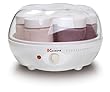
I make yogurt using this yogurt maker: Euro Cuisine YM80 Yogurt Maker. It works well. I wish it made more so I could have more than one week's worth for my family at a time, but the flavor and texture are good. I also wish it would automatically turn off rather than you having to turn it off, so it isn't the perfect yogurt maker.

I also make our granola. I use the recipe I found here. It is delicious and very healthy. The ingredients are expensive, but I priced it against the cheap stuff at the store and it is the exact same price ounce for ounce. It tastes better and is healthier. It is very simple to make. I double it and it lasts us three weeks. Yogurt and granola day is hands down Brinley's favorite. 

Wednesday--Cereal Day
My children love their cereal. So I left a cereal day there for them. There are only certain cereals they are allowed to have on a school day.

Thursday--Smoothie or Oatmeal Day
On Thursday, the kids can choose to have either a smoothie for breakfast or oatmeal and hot chocolate. Brayden always chooses smoothie and the girls choose oatmeal.

Friday--Eggs Day
Friday is the day we have eggs. Brayden likes to cook scrambled eggs for himself. He usually makes a breakfast burrito. The girls prefer eggs over easy with toast. 

Saturday and Sunday
We like to do muffins one day and cereal another. For cereal day on a weekend, they can have any kind they want. 

Caveat
I want to caveat and say this post isn't intended to make you feel guilty or like you are a bad parent if your kids eat cereal every day for breakfast. I ate cereal almost every day of my life and came out okay. Until recently, my children did, too. I like the idea of more variety in the diet, cereal is expensive, and I also think cereal doesn't have the best "staying power" in the system. I shared this with you so you know if you want to have variety for breakfast, too, there are easy and quick options for you.

Do you have any quick and easy breakfast foods your family likes?