Uses For a Timer That Will Make Parenting Easier. Tips for making discipline, chores, reading, and technology tracking easier.
Any links to Amazon are affiliate links. '
Showing posts with label manners. Show all posts
10 Uses For a Timer That Will Make Parenting Easier
How to Teach Table Manners to Your Child
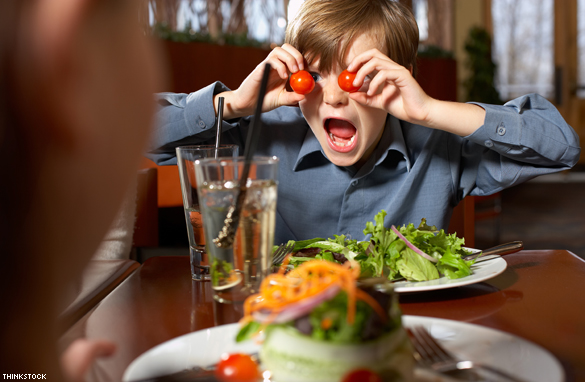
When I was in the dating pool, all it took was a meal for me to be able to quickly know if I could pursue the relationship any further or not. I remember in college being on one particular date. We had been on several dates, but none with food. The way he chewed with his mouth open was an absolute deal breaker for me (now, obviously I didn't have strong desire to pursue it further--otherwise I may have been able to get past the chewing). Clearly table manners are a big deal for me. Just how do you go about teaching good table manners to children?
The ladies of the Babywise Friendly Blog Network are posting on topics from Preschoolwise today. Check their posts out by clicking on the links below:
1-Have actual family meals
It will be really, really hard for you to teach your child to have good table manners if there is rarely a family meal to learn and practice the manners. Make sure you prioritize family mealtime.
2-Be a good example
As always, your example as a parent will go far in teaching mealtime manners. If you say, "Please pass the ketchup," your child will internalize that and be more likely to use "Please pass..." when she wants something. Teaching your children starts with you. If you try to push good manners but you don't use them yourself, you will have a hard time getting your child on board. If you want your child to have good manners, make sure you have good manners. More is caught than taught, so the saying goes.
3-Teach in times of non-conflict
If you are going to have a policy that your child can't start eating until everyone is seated or a prayer is said, you will find it easier to explain this at a time when you aren't all sitting down at the table, hungrily waiting for everyone to be seated. It will be easier to remind your child to wait to eat than to teach your child to wait to eat. Train in times of non-conflict. Another great tool to use here is Ask and Tell. This is especially handy if you are headed to another house as guests for a meal. You remind your children the rules just before you leave. Ask and Tell is one of my favorites, so if you don't know what I am talking about, GO READ!
4-Practice, practice, practice
It is all nice to talk about how to behave at meals, but you must allow for practice. What does this mean? Referring back to point one, you must have family meals where manners can be worked on. This also means your child needs time to get good at these skills. Practice. Not performance. Piano practice starts out very painfully. Manners practice can very well be the same. Your child will reach, start eating, chew with her mouth open, and talk with food in her mouth.
Some of these skills are things my children did well with, but get harder at certain points in time. A serious growth spurt can lead an 8 year old who has been praying over 3 meals a day her entire life to sit down and just start eating (that happens at my house!). A lively conversation or funny story can lead a 12 year old to talk with his mouth full in order to get his point in immediately (that happens at my house!). Certain textures of foods lead certain people to chewing with their mouths open (again, here. Ugh.).
So always remember the practice and remember the fact that children are not perfect beings.
Remember the practice policy as you extend beyond simple family meals. Do you want to host friends? Either host close friends who will be patient with your practicing, or practice with close friends before introducing people you might feel more pressure entertaining. If you are invited somewhere else, perhaps you will ask grandma to host a meal beforehand so you can practice eating elsewhere. If you want to eat out at a restaurant as a family, start with family-friendly places before heading for places with a more formal and less child-friendly atmosphere. Your kids don't have to be old to go to nicer places, but they should be practiced.
Manner Ideas
You might be wondering what manners you want to teach your children. I have a list of some of our policies, which includes the lofty "we don't say blah," so it is a great starting point for manners for young children. Some manners to aim for are (some of these are found in On Becoming Preschoolwise on page 189):
- Compliment the cook (this is a more sophisticated way of saying, "We don't say blah")
- Chew with your mouth closed (point of interest, have you ever heard of misophonia? It is a real disorder where you can't stand the sound of other people chewing. It literally means "hatred of sound." Kaitlyn has this, and so does my husband's youngest sister. If someone is chewing loudly at my house, the contortions of Kaitlyn's body let us all know).
- Say please and thank you.
- Sit up at the table. We have a certain child who likes to lounge at the table. You might have a leaner. We have a lounger.
- Do not reach. Instead, ask for things to be passed to you.
- Do not talk with your mouth full.
- Ask to be excused.
- Do not interrupt others.
Related Posts:
10 Mealtime Policies for Children
- You Teach What You Are
- Parental Influence Stands Supreme {Bloom Where You are Planted}
- It Starts With You
- More is Caught Than Taught
Prioritizing Family Meals
- Ask & Tell
- Three Candy Speed
- Ask and Tell
- Marbles for a Cause
- The Importance of Community
Restaurant Manners {Dining Out With Children}
In recent years, some restaurants around the United States have started banning certain ages of children or announcing that unruly children will not be tolerated. It really doesn't bother me if a restaurant wants to do these things--it is their restaurant and people can choose to either patron it or not when it makes policies. What I do think, however, is that it is pretty sad that they even have to go there. I think it is sad that children are allowed to behave in public like that consistently enough that restaurants feel the need to do something about it. Sure, all kids have bad moments (see below), but there is obviously enough of a consistent problem with restaurant behavior that some restaurants are willing to anger parents of young children in order to appease other patrons.
So how do you avoid your child from becoming the next one to inspire policy?
Practice makes perfect. If there is nothing else you take away from this post, keep in mind the fact that practice makes perfect. This is true no matter what it is you are trying to instill in your child. Do you want your child to behave at the library? Practice at the library. Do you want your child to clean well? Practice cleaning. Do you want your child to be able to control his temper? Practice it. Do you want your child to have good restaurant manners? Practice!
There are more steps here than simply practice. So now those of you with either more time or interest or longer attention spans, let's get more involved.
TEACH WHAT MANNERS ARE
If you want your child to behave a certain way at a restaurant, the best place to teach those ways is not necessarily in the restaurant. The best place is going to be at home. This past summer, my girls and I enjoyed going to tea parties put on by a non-profit outdoor museum close to our home. The museum focuses on Western life in the late 1800s into the early 1900s. At the tea party, they started by teaching manners. They briefly taught things like where napkins went, how to say please, thank you, and no thank you, and to wait for the entire table to be served before you began eating. All of these little girls picked up on it very quickly and practiced it perfectly.
So at home, explain and demonstrate what manners you want your child to display. Believe that your child is capable of great things. I was shocked McKenna could and would happily and patiently wait for everyone to be served when she had a plate full of treats in front of her. This was no small wait! But she did it with a smile on her face. Children rise to expectations.
And keep in mind, if your child is not used to eating dinner at the dinner table at home, he isn't going to know what expectations are when at a restaurant.
PRACTICE AT HOME
Once you have explained your expectations, practice them at home at your meals. I don't think you need to have exact replication of restaurant expectations at home in order to have success at the restaurant. I find children are smart enough to figure out that expectations are different in different settings. For example, many people have their children sit at the table for long durations at home so that they are used to it at restaurants. We don't do that; our time at the dinner table at home is considerably shorter than it is in a restaurant and we have never had issues because of it (we frequently get compliments on how well-behaved our children are when we are at restaurants).
Practice the manners that are important to you. It doesn't need to be minute for minute practice, though. So instead of making the child sit at the table for 60 plus minutes, you can require the child to ask to leave the table before he leaves. Then at the restaurant, he will know he needs to ask before getting up from the table.
EXPECT CONSISTENCY AND OBEDIENCE AT HOME
One of the biggest needs at home in order to have good public behavior is good behavior at home. If you want your child to obey in public, you need to require obedience at home. Public is not a place that you have easy means for discipline--no matter what your discipline methods are. If you require obedience and are consistent at home, then you will have greater success out in public.
Expect obedience and be consistent both at the dinner table and throughout the day.
PRACTICE AT RESTAURANTS
The next step is to practice in actual restaurants. I have written before on the topic The More You Do It, The More Your Child Will Get Used to It. This idea applies to restaurants just as much as anything else. However, I don't want you to feel like it isn't worth doing unless you can do it often. Some people eat out often and some only eat out on occasion--whether for financial, caloric, or principle reasons. You can still eat out with your children even if it is not a frequent event. Refer back to consistency and obedience at home. Have dinner together as a family and have rules and expectations at the table and your child will be smart enough to transfer those rules to restaurants.
Choose a restaurant that is "kid friendly." We have our restaurants that are kid friendly and those that we save for date night. I like to take my kids to restaurants that have a lot of background noise going on, not the ones where I can easily pick up on the conversation happening 20 feet across the room.
BE AN EXAMPLE
If you want your child to thank the waiter, you need to thank the waiter. Your child will learn from you what appropriate behavior is in a restaurant. Don't feel like you can't gently coach the child in what to do and say. "Let's put our napkins on our laps!" or discretely, "Can you please thank the waiter?"
BE AN EXAMPLE
If you want your child to thank the waiter, you need to thank the waiter. Your child will learn from you what appropriate behavior is in a restaurant. Don't feel like you can't gently coach the child in what to do and say. "Let's put our napkins on our laps!" or discretely, "Can you please thank the waiter?"
GO PREPARED
Go prepared in a couple of ways. Way one is outlining expectations. This is a time to employ Ask and Tell (follow the link for details). Before you leave your house or before you exit the car, remind your children of what is appropriate in the restaurant. Go through the lists of what cannot and what must be done. Do a little pop quiz afterward to be sure they were listening.
Your next step in preparation is to have a battle plan in place between you and your spouse. What will you do if a rule is broken? There is no one right answer here. Initially, I think reminders are fine. But there are times a child will be out of control (and I don't mean completely out of control, but to a point you feel like action needs to be taken)--at those times, what will you do? Will one of you take the child to the car? Is there a place in the restaurant you could go to talk about the behavior? Have a plan in place so you aren't putting yourself in a situation where you find yourself willing to do anything to make the child happy so you aren't disturbing the peace. You don't want to be in that situation! You don't want to end up rewarding negative behavior.
The final step in preparation is to bring along whatever you need (and is reasonable) to make the dinner enjoyable. I find this applies mostly to toddlers and babies. Do you need to bring a sippy cup? Do you need to bring some food for your pre-toddler to eat? Do you need some things to entertain the child with? When you sit down and order food, you have a long time (for a child) before food arrives, so be ready to do some distracting and entertaining.
GO AT A GOOD TIME
Be smart about the time of day you go. A child is not going to be on great behavior if you go during nap time or at bed time. He also won't be on great behavior if he is extremely hungry. If you can get to the restaurant before or by 6 PM, you will be in and out much faster than if you are in the late 6 PM hour or later. If you must go later, try to make a reservation.
EXPECT BAD DAYS
Be smart about the time of day you go. A child is not going to be on great behavior if you go during nap time or at bed time. He also won't be on great behavior if he is extremely hungry. If you can get to the restaurant before or by 6 PM, you will be in and out much faster than if you are in the late 6 PM hour or later. If you must go later, try to make a reservation.
EXPECT BAD DAYS
Some days are just bad days for kids. Your child might typically be quite good and obedient and then just be super hyper that night. Know bad days will happen. Employ your plan you made for handling the situation, but laugh it off. It doesn't mean your child is going to grow up to be a bank robber and it doesn't mean you have to limit restaurant experiences to date night. It means your child is a human being who had a bad day. We all have them. Even the best behaved kids have bad moments. The long-term ramifications lie in how that situation is handled, not in that the situation happened.
TRANSFERABLE RULES
Here are some rules I think are wise to have that can transfer well to eating anywhere--grandma's, school, a reastaurant...
- Ask to be excused from the table
- No dancing around the table while you eat
- Stay seated until you are done eating
- No playing at the table
- No toys at the table
- Inside voices are used at the table
- Ask to be passed things
- Say please and thank you
EXTRA TIPS
Take it Slowly. A little tip--don't feed the baby, pre-toddler, or toddler before you even get your food. Then your child will be long done before you even get your food. Try entertaining with coloring or small, quiet toys or games before the food comes. We have also found that for McKenna, getting her a fun drink at the end of the meal will keep her busy and content while we finish out our meal. Similarly, I bring some little snacks Brinley likes so if she is done eating I can slip her some snacks and keep her interested for a while longer.
Get it Cheap. Another tip--many restaurants have "kids eat free" nights, so find out when those are so you can make the visit more affordable for your family. You can ask around or just call the restaurants you like to go to and find out if any of them are free that night.
Do you have tips for restaurants?
Making Children Mind...Random Thoughts
Here is a list of thoughts I liked from the book Making Children Mind Without Losing Yours. These are thoughts I thought were important that either already have a post dedicated just to them or are self-explanatory enough they don't need an entire post.
- Put Marriage First: Leman discusses the importance of putting your marriage first (page 19). This is something I think most if not all -wise parents agree with. Leman recommends having a weekly date night. Ideally, you would be able to leave your house to do this. If not, try to have an evening a week that is your date night even if you are home. Rent a movie, play games, even just talking...but have it a special night for the two of you to spend together. Do it after the children are in bed. For more thoughts on putting marriage first, see the related links below.
- Tantrums: Leman says to handle tantrums, put your child in isolation (40-41). They are free to have their tantrum, but not free to do it around the family. They must do it alone. Tantrums are done for attention, so once the attention is gone, the tantrum is also. This is what we use time-outs for primarily. If a child cannot control emotions, he or she will be in time out until he or she is done with the fit. Then he or she may return to the family.
Take note that isolation doesn't need to be the only consequence for the fit. For example, a friend of mine shared with me a story of her 6 year old son and ice cream. Mom made some ice cream sundaes for a Saturday night treat. Her son threw a fit when he saw there were nuts in his ice cream. He didn't want nuts. Once he had calmed down, he nicely asked for an ice cream sandwich instead. My friend shared that had he asked nicely in the first place, she would have been fine with that. But since he threw the fit, he got no dessert. - Honesty: Leman states that if you want to get honesty from your children, you need to be honest (pages 44-45). Children learn by example, and for those young years, you are your child's number one example. No one knows more than you. No one is smarter. Umm...at least in your child's eyes. Be honest at the grocery store when you don't get charged for something. Be honest when someone calls--don't pretend you aren't home. Show your children what integrity is. Also, when you are honest with your feelings, Leman says that your children trust you more. Be honest about your faults. Your children will learn that people don't have to be perfect. Be honest about your worries and fears. Your children will see that you have been there; you can understand their feelings.
I had an opportunity to practice this with Brayden recently. My husband called from work with bad news: he was going to have to work all day Saturday for at least 12 hours. The following Sunday was Easter and we were having family over for dinner and a small celebration of Kaitlyn's birthday. McKenna was barely two weeks old. I was worried. I had planned on having my husband around to help prepare things for the gathering, and now he wouldn't be around. Brayden could tell something was wrong. He asked me repeatedly what was wrong. I told him nothing a few times. He then said, "Mama, what is wrong! Tell me!" So I told him Daddy was going to have to work and I was stressed about getting everything done in time for Kaitlyn's party all by myself. Brayden told me he would help me out. He would help make the cake and get things prepared. It was a sweet gesture. Brayden was much more at ease when he knew the truth from me. Knowing I was stressed didn't stress him out. He did what he could to help out. - Manners: Like honesty, Leman states that the best way to instill manners in your children is to be the example (page 135). If you want him to say please, you need to say please. You say please to those around you, including your spouse and your children. He also states that good manners are easiest to instill if you focus on them from a young age. I have discussed this in previous posts, but I have found exemplifying courtesy to be the best teacher. Something I am very good at saying is "Thank You." I thanked Brayden for everything from his earliest days. I thanked those around me. When he started talking, he thanked everyone for everything. Adults were shocked to have 12 month old Brayden thank them for things. It was never something I told him to say. I noticed, however, that he was not good at saying please. After monitoring myself, I noticed I was not good at saying it, either. My tone implied it, but I didn't say the word. I worked hard to get it into my every day vocabulary. Kaitlyn grew up hearing both please and thank you from me, and she is very good at saying both. Brayden still needs to be reminded sometimes. I have seen that teaching by example from a young age is the best way to go when teaching manners.
- Reprimanding: Leman states that when your child says or does something discourteous, you shouldn't reprimand your child in front of that person. You need to take your child to another room or somewhere private and talk to your child about it there, not while there is an audience (page 136).
- Belonging: Leman says that parents need to work to ensure their children feel a sense of belonging in the family. He says that your child will belong somewhere. If he doesn't belong with the family, he will belong with a peer-group--but he will belong. Some ideas for helping your child feel like he belongs with the family are to let him have a say in planning family activities and trips, ask their opinions when facing problems in the family, give them work to do at home, and explain reasons for rules (as age appropriate) (pages 161-162).
Related Posts/Blog Labels:
- leman (blog label)
- marriage (blog label)
- manners (blog label)
- Put Your Marriage First
- Gratitude
How to Stop Your Baby From Throwing/Dropping Food Off the Tray
How to stop your baby from throwing or dropping food off of her tray.
Intentionally throwing food off of the tray is not something I ever experienced with Brayden. Sure, food fell off the tray while he was eating sometimes, but he never intentionally threw it off.
Then Kaitlyn came along. She is such an easy baby in so many ways, but she does have her vices. One of those is dropping food off her tray. I wasn't sure she was doing it on purpose at first, but after some observation, I came to realize she was.
She doesn't do it immediately; she signs and says "all done" first, but if I don't respond fast enough and she is feeling impatient, she starts to throw her food on the floor. I am pretty sure she has learned that I quickly respond when she throws her food. The problem here is that with two kids, I can't always immediately respond to the desires of one, so when she is done, I can't always get her out right away. Another problem I have is that she is trying to get my attention in the appropriate and polite way first, then moving on to other means.
My personal solution for this mostly lies with myself. I have made more of an effort to respond to her as soon as she asks in her appropriate way. If I can't get to her right away, I at least look at her and tell her I will be there in one minute. She is less prone to throw food if I at least acknowledge her.
If she announces that she is all done but I want her to stay in her highchair for a bit longer for whatever reason, I will immediately remove her food from her so she can't resort to dropping her food off her tray if she gets impatient.
But maybe your child is throwing/dropping without using better means of communication first. If that is the case, I would use the firm voice, "that's a no," 'mommy glare,' and then take the food away and tell her she can get out when she signs or says all done, not by throwing her food. If your child is old enough to be sitting and eating finger foods, then she is most likely old enough to communicate in some way that she is done (other than throwing food).
The first couple of meals, I would take her hands and physically sign all done for her and also say it. I would then tell her good girl and get her out. After a few times (based on age and ability), have her do it herself. When she does it, praise her for being a good girl and obeying, etc.
If you are sure your baby just can't communicate that yet, then I would say you need to watch more closely for other cues. You want to catch her before she gets to the food-throwing point. Get her out before that point. Before you get her out, ask if she is all done and sign it to her and/or for her.
What you don't want to do is have baby throw food because she wants out and you then immediately get her out. That is reinforcing the wrong behavior. That is the reason I suggest you remove the food, then have her sit and ask nicely.
If your baby is throwing food just randomly throughout the meal, then you can take the food away immediately and wait for 30 seconds to a minute. Then give it back to her and tell her she can have her food but may not throw it. At some point (up to you) you would take it away for good. You could also take her out of the highchair and tell her she can go back if she will not throw her food.
Don't underestimate the comprehension ability of your children. They understand much earlier than we realize, and much earlier than they can really show their comprehension.
Related Posts:
- 10 Mealtime Policies for Children
- Baby Highchair Manners
- Creating a "Good Eater"
- How to Teach Table Manners to Your Child
- Mealtime Offenses (and Defenses)
- Picky Eaters
- Picky Eaters: Born or Made?
- Pre-Toddler Mealtime Expectations
- Refusal of Favorite Foods
- Restaurant Manners {Dining Out With Children}
- Throwing/Dropping Food off of the Tray
Baby Highchair Manners
But I am not perfect about it. Here is a story that illustrates a major blunder I made with Kaitlyn regarding toys while eating.
Brayden got no toys while he was eating. He was a good, fast eater and loved food. I had fully planned on following that same path with Kaitlyn.
Kaitlyn, however, was (and is) not that fond of baby food. She likes her veggies, and has grown to like her cereal, and only tolerates her fruit, but she started out just disgusted at everything other than veggies. I found if she had a toy, she was distracted and would eat. So I let her have it. She had reflux and therefore food was always a concern for me when it came to her. Then the game started.
Brayden never did play that game where they drop toys and you pick them up a million times in an hour, so I guess I wasn't really aware of what I was in for. Also, he was a boy and boys just aren't born knowing how to schmooze and manipulate the situation like girls are. :-)
At one point, Kaitlyn started dropping her toys while eating. She then stared at them, then looked at me with big, sad eyes. She then put her hands together in front of her mouth and refused to eat another bite until I picked up the lost toy. Once I gave it to her, she would eat again (that is, until she dropped it, which often took less than one second). At first I thought it could only possibly last a week until she tired of the game. Nope. It was still a huge hit after a month.
I was so tired of the game! SO TIRED! And I did it to myself. Oh how silly. One weekend, I had had it with the game. So Monday, after breakfast, she got no toys. I just stopped it right there and told her no more toys, She ate just fine, and ate well without them. She ate faster. She would sometimes look at me with this look. I knew what she was asking for. I told her no more toys while she was eating. She was fine. She accepted it with no fits or food strikes.
With Brayden, he didn't get toys while I was feeding him. Once the meal was over and I needed him in the highchair still for cleaning up, cooking, eating, or whatever, he could have them. I find that to be just fine. I moved that way for Kaitlyn, though at this age she usually wants some bread, bananas, and cheese after she is done with the yucky baby food. So I think toys in the high chair are just fine if you aren't feeding them.
I tell this story to illustrate that you have to be careful what you allow. However, if you have allowed things in the past, it doesn't mean you are stuck forever. You can make mistakes and correct them.
For things like raspberries and spitting, I just have to do my "that's a no" coupled with my mommy glare (the look moms give when you have done something wrong). Then consistency. You never allow it. They will get it. Babies don't want to do things they shouldn't. They look to you for guidance on what they should or should not be doing. Yes, they test, but once they see the rule is the same, they happily comply.
That is the reason I also do not laugh or smile when they do something they shouldn't, even when it is really cute. When I really must laugh and smile, which does happen of course, I turn my head, cover my mouth, and even leave the room. One giggle from you and baby will be working hard to repeat your reaction. They love to please. So show your pleasure when they are behaving as they should.
There are things babies like and need to do to explore and learn. That is totally fine. The problem with Kaitlyn's toy dropping was not that she did it, but when she did it. It was interfering with mealtime. She still loves to drop it and watch where it lands and have me pick it up for her, but we do it during playtime, not mealtime. It is like an example used in Toddlerwise of a baby playing in the dog's water. Playing in water isn't a bad thing, and it is fun for the baby, but the dog's water is gross (even if you keep it perfectly clean, that is gross). So you let baby splash in the tub, or take baby to a water-safe place and give him a bowl of clean, non-dog drool water to splash in. I find that babies are smart enough to make the distinction for when and where okay and when and where it isn't. Naturally, you have to apply this age-appropriately and developmentally appropriately with each child.
Subscribe to:
Posts (Atom)