Any links to Amazon are affiliate links. '
Showing posts with label postpartum. Show all posts

Babywise, Act 2, Scene 1: What is this?!

by Ashley Bellis
Two sons ages 4 years (J1) and 1 year (J2)

This time last year I was writing a Babywise success story. I was proud of my accomplishments with my first son. He was well-established in his sleeping and routine. Yes, there were issues. Yes, there were things about Babywise that I wish I had incorporated better. Yes, there were even some things I saw in my personality that were now coming out of my son. But overall, the apple hadn’t fallen far from the tree, and my husband and I were tickled! Our almost three-year-old firstborn was a major success in every way.

How Babywise helped through the second child, postpartum depression, and working.
This time last year I was also pregnant with number two, J2. J2 threw me for a loop from the get go. He wasn’t conceived on time (per my schedule). He wasn’t the gender I expected (I was almost confident that he was a she based on different feelings in pregnancy). He never posed nicely for an ultrasound. He shifted from head down to transverse at 38 weeks. (For those who are curious, that hurt like the dickens. Oh my goodness, I am recalling the major discomfort now.) He shifted from transverse feet up, to transverse feet down, to full-out breech. At 41 weeks, we scheduled the C-section. J2 just wasn’t fitting my mold for how my second child was supposed to go. First child = Norman Rockwell painting (until he became a toddler).

Good news, J2 was delivered safely and healthily exactly one week before J1’s birthday. How awesome is that? Two birthdays within a week. I seriously love that! I also bonded so much faster with him than with J1. Motherly experience? I can’t say, but I felt so much connection with this little person. We came home from the hospital, and life hit. It hit hard. I technically couldn’t pick up J1 due to his size and my C-section lifting restrictions. I couldn’t drive. It was insanely hot and dry outside (early July). And not to mention, all the “fun” of the newborn stage. To any moms out there that are in the newborn stage, I understand your fear, your concern, your frustration, and your tears. My new baby wasn’t textbook. He just didn’t follow the schedule I set out for him! Why not? It worked so well for his brother. It worked out so well for me!

I had him tested for reflux. We took him to a chiropractor at 4 weeks old. I tried this method. I tried that method. I scoured and poured over resources because my baby wasn’t fitting the schedule! He was sweet as could be, but he wasn’t getting the sleep I know he needed. J2 did not have reflux. The chiro confirmed that. And after four weeks of questioning, hearing those words from the chiro himself made me cry tears of joy! And J2 did not need a regimen of appointments as his adjustment held after just two visits. I was so proud of that little baby! He wasn’t sick or in pain, something just wasn’t right in his environment; which put the pressure on me to figure out what.

At 4 weeks post-partum my mom and grandma came to visit and help. I had other friends visit before then, and everyone said, “Ashley, relax. He’s just a baby. He’s gonna cry. He will get over it.” But I, my friend, I couldn’t handle it. I just couldn’t. I had so much guilt if he was crying because he was overtired. Then I felt guilt that J1 wasn’t getting the attention he needed. And heaven forbid I had half an hour to myself. I was losing it. And my mom said, “How about we get you a swing? That might help.” I never had a swing with J1. I viewed it as an unnecessary expense that would result in a sleep aid crutch. Well, my neighbor sold me her used baby swing, and that swing changed everything. When J2 woke early, I would plop him the swing – swaddled and all. When he started breaking swaddles, he would still sleep in the swing. I could be at peace knowing he was at peace.

I returned to part-time work when J2 was 8 weeks old. The transition at the sitter’s was rough. He refused the bottle. He wasn’t comfortable in the environment. But I have been blessed with amazing sitters. My dear friend used various bottles, various nipples, various feeding positions to get J2 to eat. We tried breast milk and formula. He was a stubborn little beastie. Then, one day, the clouds opened and J2 ate his bottle right up. Then he started sleeping better. Then a schedule was falling into place! A schedule at the sitter’s AND at home! What do you know? It takes practice to get a schedule in place. Who knew time was needed?! (Disclaimer: I knew time was needed. But in the newborn phase, I forgot everything.)

I remember reading on the Babywisemom’s blog that life got better at 3 months of age, and then life was golden at 6 months. I kept shooting for that 6-month mark. My son was successful on the schedule, but he was still waking in the middle of the night. And I would feed him, or hold him, or shush him. I only used the swing once or twice during the night. Once we hit the 6-month mark, he started sleeping through the night! I couldn’t believe it! It was happening. There have been a few exceptions since then, mostly due to sickness or teething, but on the almost-eve of J2’s first birthday we are where we want to be at with him.

Something I hesitate to include, but something I feel needs to be said:
During J2’s first year of life, I have really struggled emotionally. Yes, I bonded very well with him. I love him, I love J1, I love everyone. Except myself. Dozens of times during this past year I have felt crazy. Crazy thoughts, crazy fears, crazy dreams, and more persistent crazy obsessions. I never thought about harming my kids ever. My “crazy” (as I hatingly refer to it as) always directed itself at me. After enough episodes and tears and fears, I scheduled an appointment with a therapist. I was 10.5 months post-partum. I have post-partum depression. It is a struggle to this day. I have triggers, one of the biggest being sleep deprivation (surprise surprise). Mommas, if you’re feeling like something is off, if you’re thinking violent thoughts toward yourself or your babies, if you are months into motherhood and can’t grasp reality, seek someone out. I wish I reached out for help MONTHS before I did. I had friends and family members concerned about me. I never told my husband the darkest of my dark thoughts. I could never voice the thoughts out loud (until therapy). I remember carefully selecting answers to a survey my son’s pediatrician gave me at his 2 month visit. I scored just above the “concerned” level, but I really should have placed in the “concerned” level. There is nothing to be ashamed about with post-partum depression. It’s not fake. It’s not “just a phase.” I’ve had depression and anxiety before, and this feels so much different. Confide in someone trained to help mothers. It is best for you, and also best for your family!
And one more piece of advice for the working moms:
A lot of what you read online by the Babywise moms is from a stay-at-home perspective. I love them and I adore their perspectives! Trust me, this is not a slam to them. It is an encouragement to you that your schedule will look different. Your baby will most likely take longer to adapt to a schedule. Your baby will get there. Looking back, I would love to tell myself to allow 2-3 times what other babies are doing. If the baby in the example is sleeping 6 hour stretches at 6 weeks old, it might take your baby until 12 weeks or 18 weeks. Don’t count yourself a failure just because your schedule isn’t matching what you read online. Working through two babies, I feel confident in my advice to you that babies of working moms will adapt to the routine, but it will most likely take extra time. Hang in there!

Despite the hard work, the tears, the frustrations, the times I refused to read anything Babywise because my baby wasn’t adhering, sticking with the schedule was so worth it! We did lots and lots of adjusting. Lots of reevaluating. At almost one year, we have a happy, healthy, bright, fun, curious, and flexible baby. I love him more than I ever thought I could love another baby! This past year was probably the hardest of my life. But it’s also been the most fruitful and fulfilling. I guess it describes life’s paradox at times. Without my Lord, my husband, and my boys, I probably wouldn’t be in any position to write this story. Through its lengthiness, I hope it gives you some hope.

Accepting and Loving Your Postpartum Body {Guest Post}

A big thanks to Emily for this wonderful post on getting to a place of accepting your post-baby body. You can see me over at FaithfullyInfertile talking about ages for dropping naps.

by Emily Parker

I recently wrote a post about my personal journey to getting back my body after having my third baby (you can read it here). It was a difficult post for me to write but since writing it I have felt a lot better about myself. So many other moms contacted me saying how they felt less alone in their post-baby bodies after seeing my photos and reading about my experience which helped me feel less alone too!

So often we read these articles about loving our bodies. How they are beautiful because they have given birth. How we should appreciate each curve as a reminder that our body once carried a baby (or several). That all sounds so nice, but in reality? When you look in the mirror you don't say "oh I'm so thankful for that stretch mark, that cellulite, and that flabby belly!" 

It's really, really hard to find a place of peace with a post-baby body. Yes, there are those women who wear their pre-pregnancy jeans home from the hospital. Or the ones who eat whatever they want and drop weight from nursing. Or the ones that barely even looked pregnant to begin with! But me? I am not one of them. And I've come to realize that most of us mamas...we aren't those women. 

Here are some of my lessons learned and advice that I hope helps others to learn to accept, and maybe even love, their post-baby bodies:

Buy Comfy Clothes: Yes, I mentioned some women come home from the hospital in their pre-pregnancy jeans. But let's just go ahead and assume that you won't be one of them. The best purchase you can make for yourself is some clothes for the postpartum time period. Yoga pants are your friend here. Baggy shirts? Tunics? Yup. They are great. Get some cuter tops in a larger size than you normally wear (for me, I went one size up from my pre-pregnancy size). Pair them with some comfy new sweatpants or yoga pants (if the tops are long enough, of course!) and you are good to go. Toss on some cute jewelry and you instantly feel better and look presentable for all the visitors who want to see the baby. Plus you can just take off that jewelry and hop into bed and be comfortable enough for a nap when the baby naps!

Be Your Best Self: You know how I mentioned getting some cute clothes that fit your current size? Also maybe pick up some new makeup! Take the time (when you can get it!) to get ready for the day. I started getting up 20 minutes earlier in the morning to give myself time to fix my hair or apply some makeup or even, sometimes, both! It helped my confidence level in a BIG way. I felt clean, I felt put together, and I felt better about the way I looked. It wasn't about looking good for others. It was about taking time for ME and feeling good about myself. 

DO NOT try on your "regular" clothes: I thought it'd be "fun" to see if any of my old clothes fit me after having my baby. Um. Horrible idea. Trying on your old clothes will only make you feel down about yourself. You don't need that. I'm guilty of not wanting to spend money on larger sized clothes so I try to make my old clothes work. It's a terrible decision. It only results in me trying on a thousand shirts in my closet and wanting to bawl my eyes out because none of it looks the way it used to. I know you've missed your normal clothes. It's been 9 long months since you've been able to wear them! Well, keep waiting. It's worth the wait! 

Be Patient: For some crazy reason I expected to look like myself within days of having my new baby. I was frustrated right from the start and it was my own fault. The saying is true "it took 9 months to gain the weight, it takes 9 months to lose it." I'm not saying it'll take the full 9 months...but patience is key. I don't care how healthy you eat or how little you gained during pregnancy. Your body is different after having a baby. And it takes time to get back to normal. You can FOR SURE help it along by eating right, exercising, drinking lots of water, getting rest, etc but it'll still take time even while doing those things. Recognizing this time period as a period of healing makes it easier to accept. Your body just went through SO MUCH trauma and it needs recovery time! 

Wait to Diet: Again, this goes along with being patient. But don't rush yourself into a diet plan. I thought I could do some dieting at 7 weeks postpartum and that it would magically put me into my goal jeans. I regret trying to diet so early. I really think you should give yourself a solid 3-6 months before being "hardcore" about weight loss. It takes that long to adjust to having the baby as part of your life anyway so why add to that stress by trying to lose weight too? Consider the first 3 months like the 4th trimester of pregnancy :) Eat right and such but don't do anything diet-wise until things are more settled. Your body will naturally shape up during this time period anyway! When I tried dieting at 7 weeks postpartum I did lose a good bit of weight (especially inches) but I was still disappointed in the results because I had too high of expectations. Waiting longer to diet allows the body to be more ready for it and to have better results!

Do Not Compare: Seriously, don't. It will suck you into a vicious cycle and make you feel so down about yourself! Don't compare your body to celebrities. Don't compare it to your best friend's. Don't compare it to people on social media. Don't even compare your body to yourself. Don't look at old pictures of yourself and get discouraged. It's hard to resist but try really, really hard just to focus on pictures of your sweet new baby! Yes, the post-baby body isn't fun, but that beautiful little baby was totally worth it! It's also so important to BE in the pictures with your baby too. While you may not feel like your most confident self right now, when you look back you will be thankful to have photos of you with your new baby. And 20 years from now your child will cherish those photos too...and they won't care that your body wasn't "perfect."

Don't Get TOO Comfortable: With the clothes that fit, a routine to get ready, and avoiding comparing to others...it's easy to get pretty comfortable with your new look. There is such a balance with everything and that includes the post-baby body. Yes, we want to love it and accept it...but we don't want to become it either. While I may not be one of "those women" who drop the baby weight without even trying...I also don't want to be one of "those women" who are still "losing the baby weight" when their child is 27 years old. While the postpartum days should be about the baby, about adjusting to your new role, and about allowing your body to heal...you don't want to completely lose sight of your goals for yourself either. I LIKE my pre-baby body and I want to make sure I see that person again! I think having a supportive spouse is really helpful in this area. My husband compliments me and makes me feel beautiful and special in all the stages my body faces, but he also is great at supporting me when it is the proper time to lose the weight. Usually men have a few pounds to lose too (although don't you hate them for how easily they lose it?!?) and getting your spouse on board with meeting your weight loss goals as a team can be so much more motivating and rewarding! You both have pre-baby bodies you can get back to!

More than anything I believe the key to accepting and loving your post-baby body is to see it for what it is. It is a natural result in giving birth. Carrying and delivering and feeding a baby from your body is an amazing gift and it changes you. It doesn't only change your appearance, but it changes your whole life. Your body is shaped differently. Your eyes see the world differently. Your heart feels a love that it has never felt before. You are changed. Your body will not always stay this way. You will go back to your pre-baby body self. But your heart will never go back, and that love makes every sacrifice we give of ourselves totally worth it. 

Related Posts on Chronicles:

One mom's experience with postpartum depression {Guest Post}

I am excited for this guest post today. This is a topic I have wanted covered on my blog for a long time. I hope this post can give you some comfort and hope. If you or loved ones around you think you might be having some PPD, please do not hesitate to talk to your doctor about it. It is no more shameful than high cholesterol or high blood pressure. And with that, here is the post.

by Paige Lyman

Over a year ago I was diagnosed with postpartum depression. It was surprising and scary at the time because it was my second pregnancy and childbirth, and I hadn't been depressed at all after my first was born (crazy mood swings, yes; depression, no). My pregnancies were healthy, my deliveries were smooth, my children were healthy. I didn't think I was the “type” to get postpartum depression (a line of thinking that was very judgmental of me, I now see in retrospect).
I think part of what made it so hard for me at the beginning was not understanding what depression really was; all the misconceptions I had. That’s what I want to do: help you understand, whether you’re going through it or you know someone who is or even might someday. So here’s a little of what it was like for me.


Let’s pretend that everyone has something called a happy jar. You walk around with this happy jar, experiencing life, and when positive things happen to you, drops fall into your jar and fill it up (I imagine it as a golden-colored liquid that emits a warm glow). Seeing the sunshine, a compliment, a smile from your baby, lunch out with a friend, a moment of spirituality—all of these things drop happiness into your jar.

But you can loose your happiness, too. Negative things evaporate those happy drops away. For every stressful traffic jam, for every awkward social situation, for every frazzled sleepless night, a few drops can be lost.

I used to think that depression meant having a very empty happy jar. But now that I’ve gone through depression, I realize that wasn't right. For me, it wasn't like having an empty happy jar. It was more like losing my jar altogether.

With my jar lost, it wasn't necessarily that I was sad. I just couldn’t experience happiness fully. When others noticed I was down and found out I was depressed, they showered me in love: compliments, girls’ nights out, lunch at my favorite restaurant, shopping trips. But the frustrating thing for me was desperately trying to catch all of this happiness, then watching it slip through my fingers because I didn't have my happy jar. Don’t get me wrong, the positivity and love around me did help. It just wasn't the solution. What I really needed was to find my jar.

There’s another analogy that really helped me. Each day, we experience thousands of things: sights, smells, sounds. Our brains take this info in and interpret it somehow. For example, say you see a dandelion growing in your yard. Your brain could come up with a variety of interpretations or thoughts in response:
  • Look at that little flower—it’s technically a weed, but it’s still so pretty. All of God’s creations are.
  • Aw, I used to love picking dandelions as a child. [Fond memories]
  • Why can’t my yard always look nice and perfect like the Jones’s?
  • Poor little dandelion. Trying so hard to be a pretty flower. But all it’ll ever be is a weed.
You know those old jukeboxes, with the stack of CDs, and you select a song and the mechanical arm inside goes to the right CD and picks it for you? Say there’s one of those in your head. The CDs are the many interpretations for a sight or sound you might experience. Your brain is the mechanical jukebox arm, which selects one of the CDs, forming thoughts from things around you all day long.

In a healthy brain, your personality and your character and your effort all go into which CD the jukebox selects. If you’re a positive person in general, or you’re making an extra effort to be positive that day, you can select more positive interpretations.

Depression is your brain getting sick, just like any part of your body might. And for me, a depressed brain was one that automatically picked the most negative interpretation for all stimuli, always. For example, the last dandelion thought above is one that I would have had (and actually did when I saw a dandelion in the yard one depressed day). 

That’s why when you have depression it feels like nothing is working. It feels like nothing makes you feel better. It feels like everything anyone says or does doesn’t even make a dent in your mood, or maybe even makes it worse. Your brain is interpreting even the positive things in your life as negative. No matter what my brain had to do (including come up with completely irrational interpretations), no matter what I fed it, the output was always negative. That’s why depression is so hard.

But it’s also why it’s so not you. It’s not your character, it’s not your personality, it’s not who you truly are. It’s your brain malfunctioning, and all it needs to do is be healed. And postpartum depression can be treated. You just need to facilitate the natural healing process (with things like medication, therapy, and good self care) to help your brain heal—just as you would do those same things to help a broken leg heal. You wouldn’t just sit at home, blaming yourself for breaking your leg and figuring you have to be like that forever. Depression is the same. It stinks, but it’s not your fault, and you need help to heal.

Still, depression is hard. So, so hard. There’s no way around that. I feel for you so much if you’re going through it now or have in the past. One thing that seemed especially hard for me was being a Babywise mom going through PPD. As Babywise moms, in general, I think we try to be pretty organized, proactive, and diligent.

Getting postpartum depression completely turned my life upside down. It’s just such a hard illness. So in the beginning, it seemed like all Babywise (and good parenting in general) was thrown out the window. My husband and I were in survival mode.

Normal motherhood guilt can be pretty bad. Depression motherhood guilt is like that times a hundred. And add on to that Babywise guilt? Guilt that I wasn’t keeping the log, that I was messing up sleep training, that my mom often rocked my baby to sleep; guilt that I wasn’t continuing independent playtime for my toddler. It was crushing. Literally debilitating.
But, to moms who might feel like I did, I want to say that the guilt is unfounded. Maybe it won’t stop you from feeling it, but maybe at least knowing that it’s irrational can help. My postpartum depression hit when my baby was three weeks old. She wasn’t sleep trained yet. For a long time I figured that I had just “failed” when it came to Babywise and her completely—or maybe I’d have to do some major catch-up because she had fallen so behind. But looking back now (my daughter turned one last month), I can see that it wasn’t true at all. My daughter sleeps through the night; she did at three months. She hit all the normal milestones. She’s happy and giggly and fun and all of us (me, my husband, her brother) love her to pieces and each want to be the first one to get her when she wakes up from naps. Yes, I’ll admit that I think she’s one special baby. :) But the main point is, depression doesn’t make it impossible for you to be a Babywise mom, or to be whatever type of amazing mom you aspired to be, for that matter. It was hard for me to believe that for a long time, but now I can definitely see that it’s true.

All that said, I would definitely recommend staying away from parenting books if they make you feel worse. I know for me they did. I read parenting books and blogs all the time before my baby was born. I took notes. But after the depression hit, each bit of advice I read was just one other thing to feel guilty for, one other thing my brain could point to and say, “See? You’re not doing that! You’re failing!” It was so sad because it wasn’t just parenting blogs that did that: it was lots of things. Like the religious talks that I love. Or even compliments. (“Your baby is so smart!” So smart? Is she too smart? Does that mean I’ve pushed her too hard? I’m such a heartless mother!).

I guess it’s just a very rough symptom of depression. But don’t think you need to feel bad that those things do make you feel bad. It doesn’t mean you’re a bad mom or that you can’t handle it. It just means you’re depressed. So just don’t read parenting books or blogs for a while. Focus on the basics, the essentials. That’s often what we do when we get sick, anyway. Other illnesses (which can be completely awful) still help us grow and learn, strengthen our character. Postpartum depression can do the same.

Read more about my experience with postpartum depression and more specific ways to help those who are going through it: http://www.paigeandjosh.com/2014/04/03/what-my-postpartum-depression-has-been-like/

Postpartum Real Life

source
Did you know (and most of you reading this are parents so you do) that after you have a baby, your life is different forever? I think a lot of us went into parenting not really having an idea about the completeness of that fact. As I look back on having Brayden, I think I probably expected a slightly exaggerated change of what it is to bring a puppy home. Ha!

Your Pregnancy & Birth states, "Having a baby will change the way you live your daily life...Your old routines may no longer work. If you know this in advance and try to accept these changes rather than fight them, you'll be a lot more relaxed as you start your life with the new baby" (page 201). 

This is true with your first or fourth baby (or any number in between or after). I didn't find the babies after my first to be as much of a shock to the system of our lives since I had a better idea of the reality of what it means to have a baby, but it still changed things. And it changes things for everyone in the family. 

How do you adjust to and deal with these new changes?

One great way is to talk about them. I think as mothers we are so lucky to live in this modern time when we can connect with other mothers going through what we are going through. Sure, moms have always had neighbors, friends, and family to talk to. On top of that, though, we now have social media. We have the ability to get with a group of moms who birthed a baby in a two week time span of us who also have the same parenting philosophies as us and talk about it. I did not have this with my first baby and for the first few months of life with my second baby and let me tell you, it is so valuable! There is something so reassuring to know you aren't the only one going through a particular challenge at the time.

"All new parents reach the end of their rope from time to time. This is even more true if you don't have a lot of support or if your baby is fussy" and might I add or your baby doesn't sleep (page 202). Don't feel bad when you get there--to the end of that rope. You haven't slept well in a long time and you are responsible for taking care of a helpless human who can't communicate with words and you have to get to know. There will be days you reach the end. When you do, turn to help from friends, family, and neighbors. 

Spouse
You aren't the only one adjusting. Your spouse is also. Many dads don't have a clue what to do to be helpful. It is helpful if you verbalize what you need help with and what he could do for you. With our first couple of babies, my husband threw himself into taking on big huge projects immediately following the birth of a baby. I think he was trying to do something to contribute to the family, but in reality it wasn't very helpful for me to take a couple of days off of work to go outside and build something. So before McKenna was born, I told him what would be helpful to me. Things were better. Then before Brinley was born, we had things completely and frankly laid out. He was very helpful and didn't start up any new projects :)

Allow your spouse to help with the baby. If you are like me, you have a hard time handing your baby over to someone else to take care of them. I often stick around even if someone is changing the diaper for me or something. Part of it is that I feel bad that someone else is doing it and part is I worry the diaper won't be put on just right. I obviously know the baby better than anyone. But my husband needs the chance to get to know the baby also. It is a good idea to have your spouse do some things in helping care for the baby. Diaper changes, dreamfeeds, bathing, holding...let your spouse do things with the baby. Some are nervous--encourage them.

Siblings
If you have other children, they will obviously experience a big change with a new baby. Some struggle with change more than others. Some get jealous, some are instantly in love. No matter how they adjust to change, you will have less time for them than you did before the baby was here. Some are so in love with the baby they don't care. Some are understanding but still get anxiety about it all. Some get right out mad.

Still have your one-on-one time with your child. Guess what, having a second, third, fourth, etc. baby is challenging because you can't just take a nap any old time the baby is. You have children with needs. Make sure you still have one-on-one time with your other child(ren)--even if it is just reading a story with just you and your child before bed while your spouse holds the baby in another room. 

Have your child help you with baby duties. I like to make it clear the child is helping me and/or serving the baby--I don't want the child to start to think he/she is in charge of the baby. I want the relationship to  be a sibling relationship. That is why I focus on helping me or serving the baby.

Give it time. Your child will soon get used to having a baby around. As will everyone else. You will adjust. Your spouse will adjust. Your children will adjust. You will all learn what your new life is like and what your new normal is. 

You can read more about the postpartum period here:

And for your enjoyment, I am sure many of you have seen this but I can't get enough.


Postpartum Changes in Your Body

me with Brinley--two days postpartum
While I knew some basic facts of what to expect postpartum after I had Brayden, I didn't have the full picture. And maybe you can't until you have "been there." Sometimes we try to warn and prepare each other about things but we never fully grasp it until we experience it for ourselves.

It is a good idea to know as much as you can about what to expect postpartum so you face them head on and take care of them. I find a frustrating thing in anything you read about this period is they say to eat well, exercise, and get lots of rest. Sure, sure. Yes, logically that all makes perfect sense. Those are all good things for your body. But those are all things that are easier said than done! When Brayden was a baby, I remember many days when the evening rolled around and I realized I hadn't even brushed my teeth yet that day! There were also many days I didn't get a chance to eat until well after lunch time, and that is as a nursing mother! Sleep?!? Ha! I had good intentions with exercise, but by the time I got him fed and ready for a nice walk, we would make it about 10 feet down the road before he was screaming his head off...

Happily, as I had more children, I was much better prepared and much more knowledgeable and able to get a lot more food, rest, and exercise than I had with Brayden. Plus I had the Babywise system to help keep my life in order! Knowing what you might be able to expect with your body can be helpful in making this postpartum period a bit easier. 

BODY CHANGES
I recently talked about how your body is different after delivering a baby--see it here in Postpartum Body. That was more of a "body image" post. Now I want to talk nitty-gritty. 

Here is what is going to happen. Your uterus will go from about 2.5 pounds down to 2 ounces over the first six week (pages 193-194 in Your Pregnancy & Birth by The American College of Obstetricians and Gynecologists). So because of that fact, know you will initially still look very pregnant. And there is a good chance that even when that uterus has shrunk, you will not be back to your pre-pregnancy size. Even if you are the same weight, things have been shifted around. I have found this to be truer with each baby I have. 

And the bleeding. It seems nice that you get to have about 9 months off from your period during pregnancy...but postpartum you get to have lochia--which can last for as short as two weeks or even longer than a month. All with no tampon. You get to bleed into a pad that whole time. Awesome right? And it isn't just the inconvenience of bleeding and the grossness of the pad, but it adds to how long you are up each night. You have to change that pad through the night about as often as you are feeding your baby. 

If you are nursing, each time you nurse, it will cause your uterus to contract more and I have found the blood flow to increase significantly during and right after breastfeeding your baby. Want to know an embarrassing story? You may remember that Kaitlyn, my second born, was in the NICU. About a day after she was born, I was in the NICU feeding her. The babies were all in one room, so we weren't in a nice private room. It was a "studio" NICU. So I fed Kaitlyn, held her for a while, and then it was time to put her back for vitals to be checked. As I stood, blood gushed down my leg and onto the floor. The nurse, bless her, assured me that it happened all the time and not to worry about it. 

Since that day, I always change my pad before each time I nurse my baby for at least the first week.

No matter how you delivered your baby, there will be pain associated. I don't have cesarean tips (if you do, please feel free to share in the comments!). As for vaginal--I remember before I had babies my cousins once laughing about having no idea there would be ice packs involved postpartum and laughing maniacally about it. So here you go. If you deliver vaginally, you will be tender where the baby came out. You might need to ice it. More on this pain in the section below.

Now for the menstrual period. You might start 6 weeks postpartum, you might start over a year later. But before you have your first period, you will ovulate. "This means you can get pregnant before you even know you are fertile again" (page 195 in   Your Pregnancy & Birth). Then even once it comes back, it doesn't mean you will be on a regular cycle. And you will likely find it is different than it was before you are pregnant. Different timing, different pain intensity, different length of time.

POSTPARTUM PAIN/DISCOMFORT
I don't remember really thinking about the pain that might accompany the birth of a child. I expected pain during, but didn't think much about after. 

Remember how big the uterus is and how small it is going to get? Well, that can hurt as it gets smaller. This is called afterbirth pains. Most of us don't notice it with our first baby, but these pains are loud and clear with the second and just get louder with each one it seems. This is your uterus contracting and relaxing as it shrinks. They typically are intense for a few days.

Remember how I mentioned the blood flow increasing significantly while breastfeeding? Well, so does the pain. In fact, after the birth of Kaitlyn and McKenna, the only pain I had was the afterbirth pain. I would take some Tylenol about 20 minutes before I nursed them so I could have some relief from the pain while nursing (I tore with Brinley so there was more pain than just the afterbirth pains).

Speaking of tearing, the tearing of the perineum really hurts! I had a third degree tear with Brayden and a second degree with Brinley. Having had two postpartum periods with tearing and two without, let me assure you that it hurts a lot more and recovery time is more painful and longer with the tearing. I was a bit shocked after Brinley after having had a couple of "vacations" from the pain. "They" say to do kegals to help the pain.

There are other ways to help. Even if you didn't tear, there is a good chance you will be a bit tender and sore for a few days, which is understandable since you just pushed a baby out.  This is when the ice pack comes in. Here are some ideas for helping this area heal faster and feel better:
  • Ice pack--I use these the entire time that I am in the hospital.
  • Witch hazel--I always buy extra of this to have at home to use after the hospital.
  • Dibucaine ointment or cream--I always buy extra of this for home, too. This and witch hazel are most helpful for the tearing. 
  • Sizt baths--water is an amazing thing for helping things to heal. I do a sitz bath every day for 1-2 weeks and then any time I feel sore after that. I make a rule for myself that I have to do the sitz. I always do it around 1 PM--either just before or just after the feeding around that time of day.
  • Water bottle--Use a water bottle that can be squeezed every time you urinate for a while. 
  • Pillow or doughnut--I didn't need this with any of my girls, but it was a necessity after Brayden. I tore A LOT with him. Not only my third degree tear, but up into the birth canal as well. I had no shame with my doughnut. I even took it with me to Brayden's two week appointment. 
Hemorrhoids can definitely happen from all of the pushing from labor. The witch hazel helps here as does the sitz bath (seriously do the sitz bath--it is so helpful!). Creams can help with these also. 

After Brayden was born, I was more than a bit scared to have a bowel movement. My first bowel movement postpartum was as equally anticipated as his was! It is normal to have a delay in the first bowel movement for you after delivering a baby. Short walks can help, fiber helps, water helps, and a stool softener helps. Some women suffer from incontinence after delivering a baby--if you are one, be sure to let your doctor know because your doctor can help.

After 2-4 days postpartum, the milk comes in. Now, after Brayden was born, I was in some pain. I have described lots of tearing, and with that came over 50 stitches. Things were tender. But that paled in comparison to the pain I experienced when my milk came in. Oh my pain! It was incredibly painful. The good news is that it was only this painful for me after Brayden, so if you had pain after your first baby, I hope you are like me and don't with your subsequent. It is just mildly discomforting. If you are having pain, here are some tips found in Your Pregnancy & Birth.
  • Wear a good-fitting bra. But let me tell you from experience, I found the underwire in bras to add TONS of pain, so if you are in a lot of pain, go for a bra without the underwire.
  • Ice packs can help reduce swelling.
  • Pain medication.
  • Don't express milk. Why? Because then your body keeps producing. However, I remember reading tips like that and didn't do anything to relieve the pressure. With my girls, however, I would pump a bit of milk to help take the edge off of the swelling. It also helps prevent you from being so hard that baby can't even latch. So if you are in a lot of pain, go ahead and pump enough for relief. Just don't pump too much because your body will want to replace what you pumped.
And on top of all of this, you will be tired. You likely haven't slept well in weeks since being 9 months pregnant is so uncomfortable. You delivered a child. Beyond physical stress of this, you have lost a lot of blood. You may have injuries (cesarean incision or tearing) that your body needs to work to fix. Then you add in taking care of a baby around the clock. You are tired!

Don't be afraid to ask for help. I have a friend who has her babies sleep in the nursery at the hospital while she is there. She even has them feed the baby with a bottle for one feeding so she can get a 6 hour stretch of sleep in. And guess what? Her babies breastfeed successfully and love her just the same. I think it is a great idea because then you get to have some sleep initially. Once you go home, you likely won't have the luxury of having a team of women who are very experienced at taking care of babies to watch your baby for a night. It isn't for everyone, but if it is for you, go for it!

You can also get help at home. Get help with chores, with watching other kids, with being on baby duty so you can get a deep sleep...whatever you need.

Sleep if you can. "They" always say sleep when baby sleeps. This can work for your first baby, and maybe even sometimes for your second, but in reality, it just isn't very possible after that. You will have other children to take care of and watch. You might need to go to bed early for a while as your body heals or live for naps on weekends when your husband is home.

Now, yes, you can do your best to set up some sleep time for you. You have a good shot. Older children can have rest time or independent playtime or even TV time while you and the baby sleep. But I find reality to mean that even if I am trying to nap, I am not in a deep sleep because I am in charge of watching the other kids. I need to attend to needs and make sure someone doesn't go wandering outside or something while I am zonked out .

Don't be afraid to say no to visitors at certain times. I have found some people want to come over late (and in newborn time I mean late to be after 9 PM). If you want to be in bed, it is okay to say no! Let people know if you are going to try to take a nap in the afternoons. 

Pretty soon, you will probably wake up to find yourself drenched in sweat. Ugh! As if sleep wasn't restful enough already. This is a result of hormones changing. I found this to be more problematic after my first baby--so I didn't notice a huge problem with Brayden, but did with my girls. I would wake up drenched in sweat and then freeze to death every time I nursed because I was so wet. You can try sleeping on towels and changing them out each time you get up to nurse. I also keep a robe right there when I am nursing at night so I can put it on to stay warm. And flip the pillow over if you need to. Eww.

POSTPARTUM BLUES/SADNESS/DEPRESSION
You might also find yourself very anxious, sad, or even depressed. See my post Emotions for more on this topic.

SURVIVAL TIPS
For tips on making it through the postpartum period with more ease, see my post Postpartum Survival Tips. This covers everything from the physical, to the emotional, to the organizational.

Also, check out my post on the Storage Caddy for ideas for organizing things postpartum. I used one for baby stuff and one for my pads, witch hazel, peri bottle, and dibucaine ointment. 

Postpartum Body

source
The recent appearance of Kate Middleton willing to (gasp!) show off that she still looked like a pregnant lady shortly after delivering her baby has brought a lot of cheers, jeers, and "so-what's" -- but no matter the emotional reaction, people are talking.

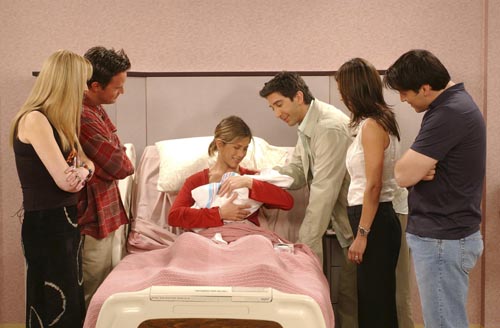
For my generation, and I imagine anyone older, realizing a woman typically still looks pregnant after delivering a baby is as equally as shocking as seeing a real live newborn and realizing they look more like aliens than cute little bundles (I remember seeing the newborn of one of my best friends when I was in college and feeling a bit sorry for her that her baby looked so funny). Both of these startling facts, I believe, can be attributed to A) women previously hiding themselves from the media after delivering a baby (and who can blame them!) and B) portrayals on TV/movies of postpartum women (who are really just actors showing off their normal selves) and their cute "newborn" babies (who are really just three month olds posing as newborns). I mean, do you remember Rachel shortly after giving birth to Emma on Friends? 

4.5 years ago, I helped throw a shower for a good friend having her first baby. She ended up having the baby a few days before the shower. She still looked pregnant. A woman came who had no children yet and commented, "I thought you had your baby?!?!?" The rest of us who had children smiled knowingly--News Flash! Women still look pregnant after they deliver a baby. Most women on TV are just acting like they are pregnant. So when it is time to act like they are no longer pregnant, they look like an actress working in Hollywood.

So why do we still look pregnant? In the book Your Pregnancy & Birth by The American College of Obstetricians and Gynecologists, it states, "Right after delivery, you will still look like you are pregnant. During pregnancy, the abdominal muscles stretched out little by little. They won't just snap back into place the minute your baby is born" (page 195).

It then goes on to say, "Give your body time to go back to normal" (page 195).

Okay wait. Anyone here have their body go back to just how it was before the baby was born? Anyone? Not me! Not for any baby I have had. You hear tales of babies changing everything from hair texture to the size of your feet. So, yes, give your body time to go back to normal, but not the old normal, the new normal.

I came to a crazy realization the other night as I sat around the campfire with my extended family and listened to my aunt talk about changes she is experiencing right now. As a female, you are born and you grow up like a "normal" person would. Then you get your menstrual cycle--aka period, Aunt Flow, the curse, surfing the crimson wave, monthly friend, on the rag, that time of the month...you get the drift. This is your new "normal." You get to enjoy this normal for 5-20ish years in most cases before you encounter a new normal with the birth of your first child.

With the birth of each child, you will spend some time figuring out what the new normal is for you. As you seek to find this new normal, you will have a vast array of hormones raging through your body, especially if you breastfeed. By the time you figure it out what normal is, you will likely have very little time to enjoy knowing yourself before the next pregnancy comes along. 

At some point, you stop birthing children and can once again enjoy 5-20 years of "normal" before you enter menopause. This is assuming you don't have hormonal issues along the way.

As women, our bodies are constantly changing. So use the word "normal" loosely when you fight to get back to it. 

I have developed some new normals after each baby. And I am honestly still figuring out my new normal after Brinley. Nursing a baby doesn't lend itself to being "normal" so I am still coming off of those hormones since she recently turned one. I have had my hair go less curly (I have naturally curly hair), and then curly again after another baby. I have had my feet change size and shape. I have gained a mole. I of course have the stretch marks all over my abdomen (each child put pressure on a different spot, so I have them all over...does it make Brinley the last child for sure since she is the only one to not give me stretch marks? That means she deserves to be the spoiled youngest right? Of course she did give me the new mole...). My menstrual cycle has changed severity and length...

This sounds very bleak, but there is a plus side. There is the new normal of being a mom. Your body did some amazing things, and changed though it is, it can be stronger! It has shown you what it is made of and what you are made of and you are better for it in every way. Your postpartum body is definitely different from what you are used to as "normal," but with every baby and every shift, you are more refined and better for it.

Brinley Summary: Week 10


This is a summary for Brinley's 10th week; she was nine weeks old.

EATING: GROWTH SPURT
Brinley had a growth spurt this week. This was her first growth spurt of her life that made for shorter naps all around. I had a couple of days where it felt like all I did was sit on the couch and feed her. Feeding every two hour will do that. 

Growth spurts can last from a few days to a week or so. Brinley's was about four days. And by the end, she was very noticeably bigger. 

BOTTLES
I like to give Brinley a bottle once a week. I did this with Brayden and Kaitlyn. I switched bottle brands with McKenna to a brand that leaked like crazy. It drove me crazy so I didn't use the bottle and she eventually just wouldn't take it (I know! I didn't follow my own advice!). I want to avoid repeating that mistake. 

We had parent/teacher conferences during this week. My mom came over and stayed with Brinley and McKenna while the rest of us went. Now, on Brinley's normal schedule, she would have been asleep the whole time I was gone. But I made the appointment two weeks ago, and this day happened to land on the last day of the growth spurt. So she was way off. 

My mom got her up. Four days earlier, my mom had given her a bottle with no problem. Well, this time she refused. Absolutely refused. My mom tried and tried. Brinley just cried and then fell asleep in her arms. When I got home, she was sleeping still.

Oh! And when we left the school, our battery was dead. So we had to jump it and were home about 30 minutes later than we would have been.

We got home 30 minutes after she woke up initially. That battery! It's okay--she survived just fine.

WAKETIME
This week, I started wondering if I should change waketime length. I tried going longer and it was a no go. I read through McKenna's summary for this age and saw I did the same thing with her at this age! There must be something about the age--must be a bit fitful or something. 

SLEEPING
She woke a couple of nights in the night during the growth spurt. After her growth spurt, she went back to sleeping through the night again. 

MILESTONES
Am I not funny? Brinley laughed this week for the first time--but for my mom. Not for me. She will smile at me like crazy. She is a little chatterbox who stops nursing to tell me stories. But I am apparently not funny to her :). I tried. I guess I am not comedian. I know, I know. My sense of humor is dry. At least Brayden finds me very funny--now that he is seven and can understand my sense of humor. I can have him rolling. Some day Brinley, some day.

AS FOR ME
I am losing my brain. I am forgetting everything. I gave my husband a haircut...I cut it at a half inch instead of one inch. Woops. I did the same thing--same thing--when McKenna was this age. I was helping in Kaitlyn's class. I totally read the instructions wrong and had them do the activity wrong (but what I had them do was super fun!). I had Brinley's baby quilt at a quilter's house. I brought it to her before Brinley was born, but she had a million orders. She called to tell me it was done. I told her I would go pick it up that day. Four days later I remembered that...oh my! My brain is gone. It will come back.


Postpartum Survival Tips

McKenna is now three months old! We are through the newborn stage. To celebrate, I thought I would share some tips. With each child, I have learned little things that can just make life easier during the postpartum period. This time period can be a little bumpy, so I wanted to share things I have found smooth the road. As always, please share any tips you have found work for you also!

For the Bathroom
A good friend of mine once commented on how long a trip to the bathroom took her after she had her baby. I have found this to be true, also. This can be a bit annoying, especially at night. That extra long bathroom trip is eating into your sleeping minutes! Here are some tips to make the bathroom experience easier.
  • Easy Access: Keep all of the things you need close to the toilet. I know this isn't a glamourouse conversation, but it is a real one. What might you need? Some ideas are any medicines you use such as Tucks Pads (witch hazel) and dibucaine ointment. I keep the two I am using on the counter next to the toilet and back-ups in a drawer next to the toilet. If you don't have a counter close by, put it on the back of the toilet. If you don't have a drawer close by, pay attention and put a back-up next to the one you are using when you get close to running out. Another idea are your pads. Also, you might want a change of underwear for when the pair you are wearing gets dirty. Another idea is a bottle of water for cleaning (used if you have a vaginal delivery).
  • Water Bottles: If you had a vaginal delivery, chances are the hospital suggested you use a squirt bottle with water in it to cleanse yourself rather than wiping. You fill the bottle with warm water. The trouble is that sometimes a bowel movement comes when you don't expect it and you need more water! This time around, I kept two bottles available. I kept one filled at all times for 'emergencies' and then filled the other one each time I went in. That way I knew I would always have enough water.
For Nighttime Feedings
  • Extra PJs and Bedding: Babies often leak through their diaper. When this happens, you of course need to change their pajamas and often times bedding if baby was in bed when it happened. It is the worst when this happens at night. While baby is a young newborn and I am still getting used to the location of things, I like to set out an extra pair of pajamas on the changing table. That way if the extra pajamas are needed, they are ready and waiting and I am not fumbling through the drawers at 2 AM trying to remember which drawer holds the pajamas.
  • Extra Diapers: If the diapers are not in really easy access, I suggest you set out the number of diapers you anticipate needing through the night and then a few extra. I have my babies sleep in my room for the first two weeks, so I have no changing table to use in the night. I set a stack of diapers on my night stand along with wipes so I don't need to rummage
  • Water: If you are nursing, you are going to want a nice big glass (or jug) of water close by so you can quench your thirst.
  • Burp Rag: Keep a burp rag close by for those times baby spits up.
  • Medicines/Creams: Keep your Lansinoh, gas drops, etc. close by. Also, keep any pain medication you might be taking close by.
  • Nightlight: Put a nightlight in strategic places if needed. I am one who can get to be fully awake quite quickly and easily. Full light will wake me up. I keep a nightlight in places I need some light but don't want to turn the light on and wake myself up. You also don't want light to wake up your baby.
  • Nuring Pads: I also set nursing pads out on my night stand each night before I go to bed.
For Your EmotionsWe all know what an emotional roller coaster the post-partum period is. Here are some things I have found help (see also the post Emotions).
  • Sleep: I always hate to read this advice for new moms! Get lots of sleep. Sigh. Don't we wish! But there are things you can do to get those extra Zzzz's you are missing out on. If this is yours first baby, you have more luxury of sleeping when baby is sleeping. Take advantage of that. You can go right back to sleep after the first feeding of the day. You can take an afternoon nap. You can take a nap whenever baby is napping! When Brayden was a baby, I did not take advantage of that.

    With older children, though, you have to work around them. Go to bed early. When Kaitlyn was a baby, I went to bed after her 8:30 PM feeding (she didn't do a dreamfeed as a newborn). Sometimes in McKenna's early weeks, I went to bed around 9:00 PM and set my alarm to wake for the dreamfeed. It gave me some extra hours to sleep that night. Chances are if you have older children, the only other time of day you will be able to sleep is in the afternoon when naps line up.

    If you are not a napper (like me) and hate to sleep because you are thinking of all the things you need to be getting done, make some rules for yourself. One rule I had with Kaitlyn was that I had to take a nap every day for the first month of her life. With McKenna, I wasn't as tired. I did that for the first week or two, but then I made the rule that if I got fewer than 7 hours of sleep the night before, I had to nap. Otherwise, it was optional. Make rules that work for you and your sleep needs.
  • Eat Right: Eat healthy foods that will give you energy long term. Avoid the sugar loaded foods that put you on a temporary high and then send you crashing down. You don't need any more opportunities to crash right now.
  • Walks: The Baby Whisperer often states new moms should take long walks each day. I remember one day when McKenna was 3 weeks old. I was feeling particularly down that day. We went for a family walk--I didn't feel like it but my husband made me. After we had walked a couple of blocks, I started to feel really good! It cleared my mind and it moved my body. I was better able to put things into perspective.
  • Get Out: Along those lines, get out of the house every so often. A trip to the grocery store can be thrilling! If you can, run errands when your spouse is home and can stay with the baby and/or older children. Some time a lone is nice. It is also nice to take your older children with you and have time to focus on them without worrying about the baby. Or you can take the baby and not worry about the older kids! Mix it up.
  • Know Yourself--Your Post-Partum Self: Get to know yourself and your emotional needs. They are likely different from your normal self. This is the new you for however long the hormones make you emotional.
  • Communicate: Once you know yourself, communicate your needs to your spouse. When Brayden was a baby, I handled my emotions differently and it took my husband and I several weeks to recognize that. Now, my husband knows post-partum me better than I do and he forces me to do things that will help me--hence the walks and running errands alone.
  • Exercise: Once you get the clear from your doctor, exercise! It can be hard to find time to exercise, but make it a priority. It is important to take care of yourself. You will have more energy, which makes for a more fun Mom. I recently started running with a friend and I am amazed at how much happier it makes me.
  • Consult: If your emotions are really spiraling and/or you just feel like something is off, talk to your doctor about it. Get help. You may or may not need help, but talking to your doctor will help you to know. She sees lots of pregnant women and she knows the signs.
For Your Chores
If you are like me, the chores that need to happen around the house start to really eat at you. This is one reason I have a hard time napping.
  • Break It Down: I have talked about this in the past. I have a "chore" for each day of the week. So Monday is laundry day. Tuesday is dusting, etc. You could do it like that or take one room a day. Monday is the family room. Tuesday is the master bedroom, etc. I also have the things that must be done every day (dishes!). This way, the tasks and goals are small.
  • Make Lists: When your brain isn't working well (a definite fact of life during post-partum time), lists are great. They help you keep things straight and help you remember what you need to do. I often find that while I am nursing, I think of all the things I need to get done. When I am free, I seem to forget. I have started keeping a paper and pen where I nurse so I can write the things down that I need to get done.
  • Get Help: Get your husband to help. Ask your Mom for help. When your friend offers to help, accept it. Take the help that you can. If you can afford it, hire a cleaning service! That would be nice.
  • Get Over It: HA! I need to write that to myself on a daily basis. If you think keeping a house clean is a challenge with one baby, just wait until you have a preschooler, toddler, and a baby! I can be *slightly* OCD, so I try to really keep things in perspective. At the end of the day, I can clean up. At the end of the day, I cannot spend time playing with my kids or teaching Brayden in schooltime.
  • Prioritize: Prioritize the things you need/want to get done each day. Do the most important first. That way if/when you can't complete it all, you at least have the most pressing things done. These are things that are time sensitive or things that will just wear on you if you don't do it.
  • Make Small Goals: Time is just not free flowing when you have a newborn. Even with an easy newborn, you don't have as much time. This is even more true when you have other children to take care of. I spend at least 7-8 hours each day just on McKenna! Feeding, bathing, dressing, playing with, etc. That is to say nothing of the time spent obsessing over her schedule :). Then I have the other two children and a husband! You have to just accept that you will not be able to get as much done. Over time, you learn to be more efficient and you also get more time as your baby gets older. My mother-in-law always says that the most efficient people in the world are young mothers. She says now that she is an empty-nester, she takes her time doing things. She has the whole day to get things done but she doesn't get as much done as she did with four small children at home.
For Your Sanity
  • Shower: For me, this one could also go under "emotions." I absolutely must shower every day. I feel so much more rejuvenated and refreshed. I get completely ready, down to my jewelry. It just makes me feel better. I know some people prefer to stay in their PJs all day. If that is you, go for it! Figure out what makes you feel better and do that.
  • Enjoy Nursing: When I nurse, I like to read a book. For the last year and a half or so, I have been buying books and saving them for the next nursing baby period. That way I would have books I was looking forward to reading :) It helps make the time go by faster. I had a friend that watched movies while she nursed her twins. I hate sitting still, so reading is a good thing for me to do that makes me relax and enjoy nursing.
  • Host a Party: Having friends/family over helps you in several ways. One is it gives you something other than the baby to stress out about :). Another is you are serving people and that always makes you feel better. You also have a taste of "real life" and it just gives you that social boost you need.
  • Do Hobbies: Scrapbook, sew, listen to music, dance, garden, cook...do whatever it is that makes you you. You won't have a lot of time for them, but you will have some. If this is your first child and your baby is easy, you might have a lot of time. Just don't become so wrapped up in your baby that you lose yourself. You want to maintain your identity and your personal interests. There is nothing wrong with taking care of yourself, also. It in no way takes away from your baby. It only benefits baby. Baby will have a happy, confident mom!
  • Scale Back: You can't do all that you did before baby. You can't attend every family function. You can't go to every social gathering. You can't clean the house from top to bottom every weekend. You can't run errands at the drop of a hat. You must scale back. You must learn to say no. It isn't forever. The day will come when you can start attending things as often as you would like. Our families know that when we have a new baby, we just don't go to everything. They now expect that. When go when we can. We stay home when we need to.

    When you become a parent, you have to change your lifestyle. You create a family. You can't tote baby around behind you as you refuse to give up your fun. That isn't responsible. But that doesn't mean you have to lock yourself up in your house forever, either. Again, this is a family. Baby doesn't rule all.
Those are some tips I have for surviving and adjusting during the post-partum period. I am sure many of you have great tips, also, so please share!
REALTED POSTS/BLOG LABELS