
- Book Recommendation: Nurture Shock
- Building Positive Self- Esteem
- The Importance of Free Play Time {and ideas for fitting it in}
- Praise Effort, Not Results
Why Kids Lie (and what to do about it)
Showing posts with label Nurture Shock. Show all posts
Nurture Shock Book {Blog Index}
The Importance of Free Play Time {and ideas for fitting it in}

Schools aren't the only ones to blame for the lack of free play in the lives of our children. We parents hold just as much, if not more, blame. In general, we feel like by age 7, the child better have decided what it is he/she wants to focus extra curricular focus on. No later than 8, we will be trying out for comp teams, super leagues, or signing up for intense training. We schedule their days so that time to just play is a rare thing indeed.
If neither school nor over-scheduling activities is taking up free play time, there is a good chance media is. A recent statistic I read was that the average child is spending 53 hours a week with media. 53 HOURS! That is a full time job. This post contains affiliate links.
NurtureShock, by Po Bronson and Ashley Merryman, shares that "pretend play is the way kids master symbolic representation, which soon becomes necessary for all academic coursework" (page 237). Children are different than adults. For adults, free play time is a time we relax. It is how we have fun and socialize. That isn't what free play is all about for kids. Yes, it is fun, and yes, social skills are practiced and learned, but it is more than that. It helps them make sense of the world.
As you are planning your day, be sure you have time in there for your child to just play. Encourage your child to use her imagination. Schedule in that structured play. Absolutely do some extra curricular activities outside the home. It won't hurt to have some time scheduled to allow for media. But be sure that there is time for free play as well.
We have some rules in our home. These won't all be standards that work for you, but they work for us and they can help give you an idea as you brainstorm how to balance your life.
- I don't allow TV time every day for anyone except Brinley--age 2.5 (well, 5 days; we only watch TV on Sunday if is a family activity and we rarely watch TV on Saturdays). Brinley gets more time because she has more time on her hands each day.
- Video games are allowed 3 days a week. Time spent is 1-2 hours each of those days.
- When the kids are in the school year, Saturday is largely a day of free play. During a few months, there will be a couple of basketball games some soccer games each Saturday. We might have some chores to catch upon (but we try to get those all done during the week if possible). As much as is reasonable and possible, Saturday is a free play day.
- For us, pretty much all time spent after dinner and before bed is free time. We do chores and practice piano before school. Homework is done first thing when they get home from school. My school-aged kids get a lot of structured time during the day at school. I want to be sure there is a balance of free time in their day and that will mostly happen at home.
- Brayden, at age 9, is involved on a competitive team (swim team). We want to make sure he still has free time in life and that he won't get burnt out and hate swim team. If he wants to, he is allowed to take one practice off each week. He only competes in one swim meet a month. Could we push him and he would be a more competitive swimmer at the moment? Definitely. He could swim more often and do meets more often and be further along than he is. But what would the purpose be? And how long before he decided he hated swimming and wanted to quit? And would he have time to play with his siblings and his friends?
- I do my best to schedule extra curricular activities to be done before dinner time. My girls have dance, but it is over by 5:15 on their dance days. The same is true for dance and gymnastics classes. I also try to double up on those activities. For example, McKenna has gymnastics from 4-5 and Kaitlyn has dance from 4:15-5:15 on the same day of the week. This makes it so our travel time to and from activities is less than it would be if we were traveling for them separately. That means kids can have their activities and we can still have free time in the day.
- As fun as it sounds, do not sign your child up for everything. This sounds easy and "duh" when your kids are younger, but as your kids get older, it is hard! Your child might have super talent in one area--you might want to have your child learn 3 instruments at once (or your child might want to). You might feel like your child is too athletic for just 1 competitive sports team and you will sign up for several. Or your child might have a lot of interests and want to try some of everything. We live in a rich world with a multitude of possibilities. We can do so many things. Parades kill me because I see all of these fun activities kids can do and there isn't enough time for it all. Different children can handle different amounts (I have a child who hates to be busy and a child who loves it). Just make sure you have time for your child to just play and be a child.
- I try to make sure our normal schedule allows for dinner together each day. Trying to follow this just naturally opens up our evenings for more free play for the kids.
- As my kids get older, the time spent at home is less and less structured and more and more free. I am not saying it is free for all, do whatever you want to at all times when they are home. They have responsibilities. They have chores. They get homework done. They clean up after themselves. But as I said earlier, time at school is highly structured. And remember, free play can have instruction with it. You can say, "Play in this room" or "Play in the backyard" for example. There can still be rules, requirements, limitations, and guidelines on free play.
Conclusion
Remember, free play is more than just being about "fun" and socializing. It isn't just relaxing for your child. It actually benefits your child developmentally. Make room for free time in your child's life.
See Also:
Helping Your Child Speak Words

There are things that we can do as parents to help enhance language acquisition and things we can do to harm it. The following are taken from NurtureShock.
DO
- Do speak face to face with your baby. "Studies have repeatedly shown that seeing a person's face makes a huge difference. Babies learn to decipher speech partly by lip-reading" (page 203). Watching a person speak helps a baby learn where words stop and new words begin.
- Do interact and respond to your child. We aren't talking only the "babble" and official words. We are talking non-verbals and paralanguage. Many parents have read to expose their child to as many words a day as possible. This can be helpful, but you want to make the interactions actual communication between you and your child. Notice the ways your young baby is trying to communicate with you and respond to it. Response can be describing what your child sees, touching your baby, talking back, repeat what the child said...
Studies have shown that children of mothers who respond to them within 5 seconds are six months ahead in language development of those whose mothers take longer than 5 seconds. The most important thing is not you starting conversations, it is how you respond to what your child is saying to you (page 208).
When your child is showing interest in something, describe it. Touch it. "This variable, how a parent responds to a child's vocalizations--right in the moment--seems to be the most powerful mechanism pulling a child from babble to fluent speech" (page 209). - Do physically pat, touch, or kiss your child when she is vocal. Do this in response to her babbles. Studies show this increases the "frequency and maturity of the babble" (page 214).
- Do object label. This means you tell your child what an object is. Ideally, you do this when the child is looking at the object. You follow the baby's interest.
- Do move objects while labeling them if your child is younger than 15 months old. This helps make the labeling a multisensory experience. See page 217 for more.
- Do get more people involved. Researchers have found that children do not learn words if they hear it from only one person. They need to hear it from multiple people. They distinguish pitch and speed. "By hearing what was different, they learned what was the same" (page 217).
- Do rephrase your sentences. Say the same thing in different ways. It helps children to identify what each word in a sentence really means and refers to.
- Do label shapes. I found this very interesting even though it is only briefly explained. Children have a world full of objects that are really the same when it comes to labeling, and yet they look different. Labeling shapes helps them be able to draw connections between objects.
DON'T
- Do not watch DVDs made for making babies "smarter." I think it is widely known and understood at this point in time that these DVDs do not make your child smarter. It not only doesn't help, but it actually hurts. "...the more children watched, the worse their vocabulary" (page 201). And yes, this is referring only to the shows like Baby Einstein and Brainy Baby.
- Do not "overdo" the "Do's" above. "Children need breaks for their brain to consolidate what it's learned" (page 214). It is even stated that "Sometimes children just need play time, alone, where they can babble to themselves" (page 214). Independent playtime!
- Do not pretend your child is saying words when she isn't. Putting words in your child's mouth or applying meaning incorrectly to what your child is trying to say actually confuses the child. We all think our children are brilliant, but sometimes babble is just babble. And babble is an important part of learning to speak, so don't dismiss it.
Conclusion
I really must add my own "Do," and that is to read to your children. Read daily. Reading helps you provide a more varied vocabulary than what you naturally use in your day to day life. I am actually surprised that reading with a baby wasn't addressed at all in this chapter. Add that in.
Helping Siblings Like Each Other

Siblings fight. They just do. It is going to happen no matter how much they get along in general. In a family, you live under the same roof and spend a lot of time together. You see each other at your worst moments. There are bound to be times you do not all get along. This post contains affiliate links.
That doesn't mean siblings can't get along and even enjoy each other as children. There are things you can do as parents to encourage a friendship among your children. Here are ideas taken from both NurtureShock: New Thinking About Children by Bronson and Merryman and Siblings Without Rivalry: How to Help Your Children Live Together So You Can Live Too by Faber.
Having friends over is very fun, but it is important to also have days and times when the siblings get to just play together--just them. Have time that your children play with each other without your intervention and without friends. You can even schedule this in--see Sibling Playtime and Structured Playtime With Siblings.
Teach Children Conflict Prevention
You don't want to just throw your children in a room together and say, "Play together! Have fun and good luck!" We are the teachers of our children and need to teach them life skills. This includes how to get along with people.
We aren't talking conflict resolution or conflict avoidance. We are talking conflict prevention. A lot of times, parents talk about the right way to respond to conflict with our children. NurtureShock talks about a program designed to help siblings become friends and their focus is on teaching children how to work together to prevent the conflict. "...fewer fights are the consequence of teaching the children the proactive skills of initiating play on terms they can both enjoy" (page 123).
If you have young children, this is an easier concept to work into them. You start young (read Sibling Playtime and Structured Playtime With Siblings.) You teach them to think of the other person and to show the other person love. You teach about taking turns and sharing.
If your children are older and you are wanting to change something about their dynamic, you do the same, but you have to expect some rewiring. Remember your Training in Times of Non-Conflict. You walk them through scenarios on how they can compromise and work together so they can both have fun when playing.
Let Children Work Things Out Alone
When the conflict arises, you need to allow the children to work things out on their own. If you eaves drop, do it out of their sight. Do not rush in to solve the problem. This is mentioned in NurtureShock and discussed in great detail in Siblings Without Rivalry. "Children should have the freedom to resolve their own differences" (page 142).
YES, you do need to intervene if things are getting abusive either verbally or physically. "But here's the difference: We intervene, not for the purpose of settling their argument or making a judgement, but to open the blocked channels of communication so they can get back to dealing with each other" (page 142). Basically, you help be a mediator.
Personally, at our house, if the kids can't work things out, then they need to take a break from each other. They don't wan to not play with each other, so they do put in effort to work it out.
Acknowledge Bad Feelings
Siblings Without Rivalry suggests you allow your children to express frustrations and negative feelings about the siblings. The author says, "Acknowledging bad feelings between the children led to good feelings" (page 49).
We all need to vent sometimes. I would caution a few things here. Do not join the venting. Also, there is a difference between a vent and nurturing anger. You want to encourage your child toward forgiveness, not on stroking the bitterness and allowing it to grow.
Think Twice About Books and Shows that "Teach" About Sibling Relationships
This is something I so completely agree with, in any fashion. We have to be careful with media. I love books, and I know books can be very helpful in helping our children work out worries they have, from potty training to a new baby to a big move.
But you have to be careful what you expose them to. You know the book Junie B. Jones and the Stupid Smelly Bus? I have never liked that. I know it is wildly popular. I have always viewed it as a book that will teach my children to hate the bus and school. It will plant the seed, and if they want to nurture it, it will grow. You can imagine my vindication when I read this in NurtureShock in discussing books that are supposed to teach children to get along. Research has found children fight more when exposed to these books and shows. Researchers said:
"From these books, the kids were learning novel ways to be mean to their younger siblings they'd never considered" (page 126). "The average book demonstrated virtually as many negative behaviors as positive ones" (page 127).
Ignore Certain Factors
We can make excuses for the sibling relationship. "They are fighting for my attention" "It is because one is a boy and one is a girl" or "It is because they are both girls" or "It is because they are both boys" or "It is because they are too close in age" or "It is because they are too far apart in age." Studies have shown that fights aren't about those things so much as about physical possessions. Teach children to love, to share, to respect property of others, to care about the feelings of others...research shows forcing children to share is not effective, but you can teach them to share. See How to Teach Respect for Personal Property.
Avoid Comparisons
I think this is one of the hardest things to do as a parent. I don't think we compare maliciously. We do it in awe. How can two people we created, who live in the same house with the same parents and rules, who have the same genetic heritage, be so different? How can they have such different natural talents and abilities? How can they all have such different weaknesses?
When I was due to have Kaitlyn, Jeffrey R. Holland gave a talk in which he said,
"And try not to compare your children, even if you think you are skillful at it. You may say most positively that “Susan is pretty and Sandra is bright,” but all Susan will remember is that she isn’t bright and Sandra that she isn’t pretty. Praise each child individually for what that child is, and help him or her escape our culture’s obsession with comparing, competing, and never feeling we are “enough.”"
This is hard people! Very hard. Siblings Without Rivalry agrees. There is an entire chapter on the Perils of Comparisons. "Children often experience praise of a brother or sister as a put-down of themselves. They automatically translate 'Your brother is so considerate' into 'Mom thinks I'm not.' It's a good idea to save your enthusiastic comments for the ear of the deserving child" (page 58).
This is something I have pondered a lot over the years. A whole lot. I don't think the point is to never compliment children in front of each other--or ever. I think children should learn to recognize and celebrate the good and accomplishments of others. Part of it is to not compliment everyone for the sake of complimenting. I think you can solve a lot by sticking to Praise Effort, Not Results.
There is another chapter that has similar sentiments in Siblings Without Rivalry. It is titled "Siblings in Roles."
"Let's be wary of statements like, 'He's the musician in the family'...'She is the scholar'...'He's the athlete'...'She's the artist.' No child should be allowed to corner the market on any area of human endeavor. We want to make it clear to each of our children that the joys of scholarship, dance, drama, poetry, sport are for everyone and not reserved for those who have a special aptitude" (page 98).
That sounds easy on paper, but is hard. The fact is, people have natural talents and abilities. I have a child who is far more artistic naturally than any other of my children. I have a child is who is far more naturally athletic than any of my other children. These things are there.
I love the last part of that last quote, though. Anyone can be good at something if they really want to be. Your child might not be the best artist in her class, but if she wants to be great and she puts the effort into becoming great, she can be great. You don't want to dissuade improvement upon skills and talents.
Know the Difference Between Fair and Equal
This concept is such a passion of mine. I have written on it in the past:
Trying to make things equal among your children will not result in content children. It will result in jealous children. They won't just be jealous of each other, either, but of everyone around them. They will always be comparing and declaring what isn't fair. You will find yourself constantly needing to point out what in their life is "better" than those they are jealous of. That is not a happy way for people to be! It will eat at your soul.
Siblings Without Rivalry devotes an entire chapter to this topic in "Equal is Less." Do not treat your children "equally." Treat them "fairly."
Conclusion
Your children can be friends and they can get along in general. Yes, they will fight. They are humans. They can be great friends with some relatively easy efforts from you.
Praise Effort, Not Results

This post contains affiliate links. One of my favorite chapters in the book NurtureShock: New Thinking About Children, by Po Bronson and Ashley Merryman, is called "The Inverse Power of Praise." The major point of this chapter is this: Offer praise for the effort put into things, not on the results themselves.
The Damage of Praise
Here are some examples of praise that will actually backfire:
- You are so smart!
- Good job!
- That's amazing!
Do you know someone, adult, child, or in between who is smart, but who won't put a lot of effort into things? This often results from being told how smart you are. "Giving kids the label of "smart" does not prevent them from underperforming. It might actually be causing it" (page 13). Nurture Shock discusses in great detail many studies that find this praising to have a negative impact on the effort children give later down the road.
Studies show children praised for effort rather than intelligence are willing to try harder tasks in the future. They also improve on scores over time. "Emphasizing effort gives a child a variable that the can control...They come to see themselves as in control of their success" (page 15). How vital is this? How important is it for a person to believe he/she can work hard enough to make an impact in their own lives?
Studies have also shown that children who are praised for talent rather than effort have a harder time being honest. They turn to cheating and lying.
Praise can also lead a person to becoming less intrinsically motivated. "...they do things merely to hear the praise..." I have seen this happen to people. You want your child to do the right thing or to work hard at something because that is what he or she wants to do on their own--not because of the praise that will come raining down if they do. Those children grow up to be adults, and guess what? Adults just don't get showered with praise. They just don't. You will be hard pressed to find a boss who stands by you and pats your head all day for doing your job. You certainly won't get endless praise from your children. Your spouse can't possibly spend the necessary time praising you that you will need if you become dependent on praise to motivate you to do the right thing in life.
"A person who grows up getting too frequent rewards will not have persistence, because they'll quit when the rewards disappear" (page 24). A child who is praised constantly will someday become an adult. Be careful in your praise--you don't want your child being an adult who can't try hard in life because the constant praising is gone.
Effort is Okay
People who are told simply how smart they are often start to believe that if they have to try, it proves that they aren't so smart after all. "Expending effort becomes stigmatized--it's public proof that you can't cut it on your natural gifts" (page 15). When I read this book for the first time years ago, this really stood out to me. I know that I have many times fought the idea that if I am asking questions or trying too hard, it means I am not that smart after all.
This can be applied to other things beyond intelligence. You might think if you pin something on Pinterest that relates to a topic you are generally believed to be an expert in that it somehow shows you are not that good at it. I have been impressed to see people who I consider to be expert sewers pin things about sewing on Pinterest. That is the sign of someone who will only get better in that talent because she is willing to learn more than she currently knows.
The important thing to realize is that effort is okay. It doesn't mean you are bad at something if you have to work at it.
And here it is--the brain gets stronger when it works. No matter how smart you are, you can always be smarter. No matter how much you know, there is more to learn. No matter how good you are at something, you can always get better. Effort is always rewarded at some point. Effort is worth it.
Parenting Practice
The value of effort is important to realize for ourselves. It is also important to realize as parents. We can easily think our child isn't very good at something if they can't work at it. Parents often tie so much of their own success up in the succss of their kids. We try to make up for past mistakes or failures through our children. We want them to be the best and perfect. It is important to remember and teach that great skill is not developed without great effort. Even people who have more natural talent at things do not continue to thrive and grow without effort and practice being put into it.
Correct Praise
Praising can be wonderful. It is positive parenting. Praise in general isn't wrong. There are some keys to making praise have a positive impact.
- Be specific in your praise. Tell your child exactly what it is that you are appreciating. "I am impressed with how much time you put into practicing that song. You worked on it every day! Because of that, you can play it well." That is much better than, "You are a good piano player!" or "Great job!"
- Be sincere. Researchers have found children older than 7 are suspicious and can tell if a compliment is not sincere. Really think about what you are saying and really mean it. Studies find that children actually believe in a classroom setting that the child who is struggling the most receives the most praise.
- Be real. Only praise things that are real talents and skills.
Acknowledge Mistakes
Mistakes need to be acknowledged and discussed. Pretending like the mistake never happened doesn't do your child any favors. "A child deprived of the opportunity to discuss mistakes can't learn from them" (page 22).
Pointing out mistakes can encourage people to try harder in the future. I am not talking belittling, but talking about what went wrong and what can be improved in the future. Studies show children whose parents told them they needed to do better did much better than children whose parents simply ignored the need for improvement.
Conclusion
Praising effort is most definitely not the norm in our society. Maybe we are too rushed to think of something real. Maybe we are afraid of our child feeling anything less than amazing. Maybe we are way too preoccupied with the notion of self-esteem. Maybe we are just doing what we hear everyone else around us doing.
Let's say your child makes it across the monkey bars for the first time. "Wow, that must have taken a lot of effort! You worked hard and you made it!" is superior to "Good job! You are so strong!" Avoid the "stock" praises. Be specific. Recognize the effort made. Don't be afraid to correct a child when needed. Allow your child to work hard at something; do not feel like it means your child can't be great at it.
See Also:

See Also:
Why Kids Lie (and what to do about it)
Why Kids Lie (and what to do about it)
Why Kids Lie and what to do about it. Understanding why children lie and what parents can do to help children learn to be honest.

For me, honesty is very important. Something that upsets me the most as a parent is when a child lies. Most children start out as completely honest. As time goes on, they learn to lie. With my three old enough to lie, I have two that aren't prone to lying and one that will lie and is in fact quite good at it.

For me, honesty is very important. Something that upsets me the most as a parent is when a child lies. Most children start out as completely honest. As time goes on, they learn to lie. With my three old enough to lie, I have two that aren't prone to lying and one that will lie and is in fact quite good at it.
A while back (about two years), I told you about a book I absolutely love called Nurture Shock. This book has a chapter dedicated to lying. Let's discuss. First, here are some interesting tidbits about children lying based on studies that have been done (found on page 75):
- People cannot tell when children are lying
- People believe girls lie less often than boys (not true)
- People believe younger children lie more often than older children (also not true--I am surprised anyone who has had a child would believe this. The opposite has been found to be true)
- People believe introverts lie more often than extroverts (introverts actually lie less often. They just don't have the social skills to seem honest)
More interesting information from pages 80-82:
- Most 3 year olds do not lie. If they do, follow up questions usually cause them to admit to it.
- By age 4, almost all kid start to experiment with lying. Children with older siblings seem to start earlier.
- The better children are at distinguishing lies, the more likely they are to lie.
- Most lies children tell to parents are to cover-up a transgression.
- Children start out thinking all lying is bad and slowly learn that some types of deception are okay. Most people think children start out not believing lying is bad, but the opposite is true.
- Children don't care about intent behind lies. A lie is a lie. "Any false statement--regardless of intent or belief--is a lie" (page 81).
- More intelligent children are more likely to lie and/or are better at it.
Let's get into the why behind the lying. What is the motivation to lie.
Book Recommendation: Nurture Shock

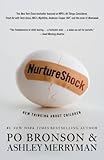
 Every so often, I read a parenting book that I absolutely love. One that I think all parents would benefit from reading. One is of course Babywise. Another very helpful one is The Baby Whisperer. Let's not forget Healthy Sleep Habits, Happy Child and one of my very favorites, The Parenting Breakthrough. And of course we have my often acclaimed The Read Aloud Handbook. Today I have another one to add to the list. Nurture Shock by Po Bronson and Ashley Merryman.
This book explores ten different situations we face as parents and discusses why and how our natural reaction on how to handle those situations is not correct. Topics are on praise, sleep (such a great chapter), race, why kids lie, gifted programs in schools, siblings, teen-rebellion, self-control, playing with others, and language skills, with a wrap up on the "super trait."
These chapters cause you to think. The authors talk about research findings on the topics and discuss it in depth, which gets you thinking about it and analyzing what you think. It is such a valuable book.
We will discuss each topic in the future. For now, get out and buy/borrow the book. It is worth it!
We will discuss each topic in the future. For now, get out and buy/borrow the book. It is worth it!
Subscribe to:
Posts (Atom)


