Any links to Amazon are affiliate links. '
Showing posts with label sleep routine. Show all posts

Sample Nap Routines

Ideas for successful nap routines to get your baby to sleep well.

Ideas for successful nap routines to get your baby to sleep well.

We all know that sleep routines are helpful and even crucial at bedtime. A lot of people are left wondering what to do at nap time, however. Should there be a routine? If so, does it need to be the same as the bedtime routine? If not, what changes can be made? How long should the sleep routine be?

How to Set Up a Nap Sleep Routine

First, yes you do want a nap routine. Sleep routines help signal to your baby that it is time for sleep. It is a simple way to communicate that it is now time for nap.

Your bedtime routine is likely a little more involved than you want your nap time routine to be. Many people do a bath as their bedtime routine, and no one wants to do 5 baths a day in order to duplicate that in a routine. Another thing you might cut back is how long you read to your baby before nap, if at all. You might read for less time than you do at bedtime or not do a nap time story at all. 

Further, I like nap routines to be relatively short. I don't want to spend 30 minutes getting my baby ready for a nap. This was even more true when I had a toddler and a baby at home. I needed both the toddler and the baby to be able to be put down for a nap quickly so that I could attend to the other one if needed. 

It is super helpful if your baby's routine can be done by anyone and done anywhere. You don't want the routine to be dependent upon you. This is one reason nursing to sleep isn't ideal for a nap routine. If you have to be the one doing the task, you will not be able to be away from your baby for a very long time. 

You also want it to be able to be done anywhere. Rocking a baby for a bit can be nice, but unless your baby is okay with substituting a sway while you stand, you might find it difficult to get your little one to sleep while traveling or even just visiting people for the day. You want to set the stage for sleep and be consistent. You want it to be soothing. 

Here are some sample nap routines I have used with my children. Some are more complicated than others. They all worked. 

Nap routine infographicRoutine 1:
  • Take to room --Pick up special blankie (when old enough for blankie--before old enough, I skipped this step) -- Lay baby in crib with blankie --Sing lullaby -- Say, "I love you! Sleep tight. Good night." --Kiss my fingers and touch to baby's nose.
Routine 2:
  • Take to room -- Swaddle --> Give kisses and hugs --Lay in crib --> Sing lullaby --Say, "I love you! Sleep well. Sleep tight. Good night." --Kiss my fingers and touch to baby's nose.
Routine 3:
  • Take to room --Close blinds and turn on sound machine --Change diaper -- Do 3 of the 4 S's (set stage, swaddle, sit) --Give kisses and hugs --Lay in crib -- Sing lullaby --Say, "I love you! Sleep well. Sleep tight. Good night." --Kiss my fingers and touch to baby's nose.
Routine 4: 
  • Take to room -- Close blinds and turn on sound machine --Read stories -- Change diaper --Change into pajamas -- Do 3 of the 4 S's (set stage, swaddle, sit) -- Give kisses and hugs --Lay in crib --Sing lullaby -- Say, "I love you! Sleep well. Sleep tight. Good night." -- Kiss my fingers and touch to baby's nose.
Here is a great thing about having a simple sleep routine in place. When your baby wakes in the night for a reason other than hunger, you can attend to the problem, then run through a quick routine and put baby back in bed. Baby will understand that is still sleep time because you did the routine.

If your little one is having a hard time sleeping, try some essential oils to help him/her relax.

Here is a note: do what works for your child. When Brayden was 10 months old, my husband started wrestling with him right before bed every night. This is pretty much cardinal sin number one when it comes to preparing a child for sleep. But it worked! It really helped wear Brayden down for sleep. So do what works even if it seems all wrong. 

Ideas for successful nap routines to get your baby to sleep well.


5 Reasons to Establish Good Sleep Habits

5 Reasons to Establish Good Sleep Habits for your baby and children.

5 Reasons to Establish Good Sleep Habits for your baby and children.

It isn't easy establishing good sleep habits in our children. It takes a lot of sacrifice and consistency. We can end up feeling house-bound as we stay home so our baby or child can sleep.. We can feel sad as we leave that party early to get our kids into bed for the night. We have to put a lot of mental exertion into thinking through optimal waketime lengths and timing naps just right. So what are the reasons we put ourselves through the difficulty of it all? 

1-Healthy Habits for Life
I am an adult who has difficulty with sleep. A huge reason I decided to train my children to sleep was that I wanted them to be able to have healthy sleep habits for life. The National Sleep Foundation reports that 22 percent of adults experience insomnia every or almost every night. About 10 percent of Americans take a sleep aid each night.  

I want sleep to come naturally to my children, which it ironically just doesn't for a fair percentage of adults out there. I want my children to be able to sleep on their own, without medication at all, throughout their lives. I obviously will have no control over what they choose to do as adults, but I can control what they learn to do as babies. I can teach them good sleep habits. I can make sure they know how to fall asleep on their own in a bed without external forces.

2-Worry Now, Not Later
Some people are born being good sleepers. It happens. Most, though, will be impacted for better or worse by the habits set before them by their parents. My oldest was not one of those children who was born a good sleeper. Initially, I thought he would "grow out of it" and become a good sleeper someday. I knew families, however, who had similar oldest children who were not good sleepers as babies who were 4-5 who hadn't yet "grown out of it." I knew I didn't want to be battling that 4-5 years later. Those same families still battled those issues as their children turned 11. They didn't just grow out of it as their parents hoped. I am not suggesting no child could ever "grow out of it" on their own, but I do think those cases are the exception and not the norm.

I am very happy that I am not worrying about something like sleep for my older children. The things you worry about as a parent do not get easier as your child gets older. I long for the days when my biggest concern with my oldest was whether or not he woke up early from his nap! No, today I worry about moral issues, school issues, lifelong learning issues, friend issues, influence issues...I am glad our primary concern is not over sleep because those other issues wouldn't go away just because we didn't have sleep down. 

3-Improve Brain Function
This post contains affiliate links. Healthy sleep improves brain function. In Healthy Sleep Habits, Happy Child, Weissbluth states: 
"...infants who sleep more during the day are better able to learn from their environment; this is because they have a better-developed ability to maintain focused or sustained attention...They learn simply from looking at the clouds and trees, touching, feeling, smelling, hearing, and watching their mother's and father's faces" (page 24). (emphasis mine)
I find this makes perfect logical sense to me. When I have had the right amount of sleep the night before, I am more alert. I can concentrate better. I don't "zone out." It seems that would be true for children, as well.

This is helpful not only for infants or toddlers. Sleep is so important for our children as they enter school. Again from Weissbluth:
"Sleep problems not only disrupt a child's nights, they disrupt his days, too, by making him less mentally alert, more inattentive, unable to do concentrate, and easily distracted. They also make him more physically impulsive, hyperactive, or lazy" (page 11). (emphasis mine) 
4-Happy Children
Another reason we bother with good sleep habits is that we want our children to be pleasant to be around. We want them to be happy and content. We want them to be a joy to others. Weissbluth says:
"Providing the growing brain with sufficient sleep is necessary for developing the ability to concentrate and an easier temperament" (page 7). (emphasis mine)

5-Time for You!
Good sleep isn't only helpful for your child--it is helpful for you! Sure, you have to make some sacrifices in the early months and even for a couple of years. But you can also get a lot done while your child is sleeping. During the night, you can sleep too! During the day, you can clean, read, exercise, sew, visit with friends and family, nap, cook, or even just daydream :). You have breaks and time to do what you need to do for your family and for yourself. This makes you happier, which makes you a nicer person to be around, which is beneficial for your children. 

Conclusion
I know it isn't easy to be establishing these good sleep habits in your young children. I also know, however, that it is very much worth it. You will not regret the effort you put in today as you train your children to sleep! I know the road can seem long when you are just embarking on it. I found I was a lot less overwhelmed with the prospect of the sacrifices before me to establish good sleep with my fourth child than I was with my first. I know the minutes crawl, but the years fly and you will be happy you put in the effort to establish good sleep habits.

If you need help establishing naps, see How to Get Your Baby to Nap.


5 Reasons to Establish Good Sleep Habits for your baby and children.

The Importance of a Sleep Routine {BFBN Week}


Today you will be hearing from Stephanie at  Giving It Grace. She is talking about the importance of a sleep routine. She covers why sleep is important and how to identify when a baby is ready to sleep. Then she talks about what to consider when creating your own sleep routine and gives some examples of what you might include in a routine. I love this advice from Stephanie:

"A sleep routine is established through a repeated succession of consistent sleep cues. The sleep routine is set by mom and dad, and is most successful when it can be done every time, any place, and by anyone." 

This is all very sound advice for you to keep in mind as you set your routine. Begin as you mean to go on--and as you have the patience to go on! Head on over to Giving It Grace to read the full advice. You can read some of my advice on Sleep Routine here.


It is Babywise Friendly Blog Network week! You will be hearing from these lovely ladies this week, all on the topic of sleep:

Dressing Baby for Sleeping

How to best dress baby for sleep so baby won't be too hot or too cold. 

How to best dress baby for sleep so baby won't be too hot or too cold.

When cold weather moves in, you will find you likely need to dress baby differently for nighttime sleep (and possibly naps). Here are some ideas for you in dressing baby for sleep.

Experiment
First, some advice. All of my babies have had slightly different preferences for how to be dressed at night. Some liked socks, some hated socks. Some liked to be dressed warmer and some liked fewer clothes on them. You will have to experiment and pay attention to how well your child does/does not sleep with certain clothing. You will want to experiment even down to the fabric of the items you are wearing. A micro-fleece swaddle blanket was the favorite of one of my children, while for another it was too hot for her and she preferred the jersey knit.

Layers
A baby or young toddler will not sleep and keep blankets on; they move around far too much. You also want to be wary of blankets in the crib with babies before they are old enough to move them away from the face on their own while sleeping. 

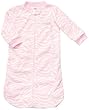
Because of this, I do layers. My idea is I put the child in what I consider to be the pajamas and then put something over it like a wearable blanket. This might be a swaddle blanket, a sleep sack, or it might be footed pajamas.

Sample Layers
A typical way I dress up my children when they are young are:

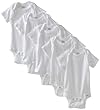
This is pretty consistently the first layer I use for any sleep time of year. This is the basic onesie.


I then add socks. I had one child who hated socks, but the other three all have/do sleep with socks on their feet. We do socks year round. Cold feet are a very common reason for waking early, so I think it is wise to start with socks and then remove them if you think the child does not like socks for sleeping.


Layer Three: Extra Warmth
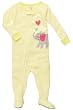
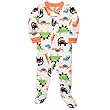
The next layer is extra warmth. If it is cold weather outside and the baby is 6-9 months or younger, I do a cotton footed pajamas like this Zip up sleep and play pictured at the right. If the child is older than 9 months but likes to be extra warm, I will do this layer, also.

For the child who is 9-12 months or older, I will do some basic cotton pants if extra warmth is needed.

If it is warm outside and the nights are warm, I do not add the extra warmth layer. This layer is skipped.

Layer Four: The "Blanket"
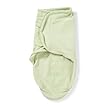
For a baby who is still swaddled, the next layer is a swaddle blanket. That often completes the ensemble. If baby needs more or less warmth, try changing the fabric of the swaddle blanket you are using. 

For the baby who is not still swaddled, there are a couple of options for what to do next. From the time baby is done being swaddled until somewhere around 9ish months, I typically do a sleep sack. 

At some point, the baby will start rolling around more and want to be more mobile. Somewhere around 9-12 months, we move from the sleep sack and into the fleece footed pajamas. We stay in this until the child no longer needs layer four. This can be for reasons varying from it is too warm at night for the layer to the child has grown old enough to keep blankets on while sleeping.

Layer Five: The Extra (optional)
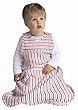
When Brinley was a baby, Merino sent this sleep sack for me to review and I absolutely fell in love (you can see her pictured in it in the first picture on this post). I totally wanted one for myself. This is the Merino Kids Baby Sleep Bag. The one I linked to is the winter weight one and they have a normal weight one. Merino wool is amazing because it is itch free and allergy safe. It keeps the body at the perfect temperature--not too cold and not too hot. The room temperature range to use it in is ten degrees (winter weight is about 59-68 degrees), so no matter what the temperature is in that range, your child will be at the right temperature.

This product is awesome because it takes so much guess work out of it. You will not regret owning this. They also have sizes for 2-4 years old if your older toddlers and young preschoolers will sleep in a sleep sack.

When Brinley was a baby, she was swaddled with this over it. Then we did the sleep sack with this over it (she likes to be warm).

As a side note, there are many other products made of Merino wool, so you can get onsies, shirts, socks, etc.
Room Temperature
Another important step is figuring out what room temperature is best for your child to sleep in. Most sleep experts say to sleep in a room from 64-72 degrees for optimal sleep. A tricky thing is keeping your house warm enough for the baby who sleeps with no blankets and yet cool enough for those sleeping under a pile of blankets (or in the summer, cool enough for the older people while warm enough for the young ones who can't pull blankets off and on as needed).

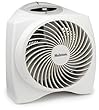
Ever since Brayden was about 6 months old, our babies have slept with the space heater you see above. We let our house come down to about 63/64 degrees and night and keep the baby room at 70 with this heater. For a while, we kept it with the older children as well, but we took them out of all of the rooms except Brinley's last winter. The other children are old enough to sleep with blankets and a space heater can add quite a bit to your electric bill. We try to only use it when the door will be shut so it can minimize the need for it to turn on.

You can definitely sleep with your house warmer at night rather than use a space heater for one room. By about age three, most children can sleep with blankets at night and keep them on.

Conclusion
As you figure out what is best for your baby, remember to experiment with the different layers and see how your baby likes it. Some rooms are warmer than other rooms, some houses are warmer than others, and some climates are warmer than others. 

How to best dress baby for sleep so baby won't be too hot or too cold.


Sleep Routine Ideas to Get Your Baby Sleeping Well

Sleep Routine Ideas to Get Your Baby Sleeping Well. A sleep routine helps your baby know it is time for sleep. Keep sleep routines consistent each time. 

Sleep Routine Ideas to Get Your Baby Sleeping Well. A sleep routine helps your baby know it is time for sleep. Keep sleep routines consistent each time.

It is a good idea to have a solid routine before sleep time to signal your little one that it is time to sleep. Below are some ideas for a naptime routine and a bedtime routine so you can aid your little one in going to sleep quickly.

Nap Routine Ideas

I prefer the least amount of "show" prior to a nap--especially now knowing that the older they get, the more tactics they use to delay bedtime. I want to have as few tactics in place to start with because believe me, your child will do everything he can think of to make naptime come a little later. A drink of water, a story, a hug, a kiss, a song, one more song, last song...you get the picture. They are smart!